

😄 Introduction
If you think Kansas is just quiet towns, wide-open skies, and that slow, steady Midwestern calm… you’re not wrong. But hidden inside the law books are some weird laws in Kansas that feel like they were written after a very long town meeting and a very strong cup of coffee.
These aren’t just “haha funny internet list” type rules. Some of these strange laws in Kansas actually come from real city ordinances and old state statutes… the kind built for a different time, but never fully cleaned out of the system. And that’s exactly what our FactManity readers love: real history, real context, and a little humor sprinkled on top.
So, if you’re the kind of curious soul who loves digging into odd American laws, quirky cultural leftovers, and “wait… that’s REAL?” moments. You are in the right place. Let’s walk through the strangest Kansas rules ever written, figure out which ones still matter today, and laugh (nicely) at the ones that reveal more about the past than the present.
Buckle up! the legal ride gets delightfully weird from here. 😊

If you’re a curious US reader who loves bizarre history, legal oddities, or fun trivia, this guide to weird laws in Kansas is written just for you.
If you enjoy exploring strange legal stories, you might also like our deep-dives into weird laws in Iowa and weird laws in Indiana.
🔥 Key Takeaways
- Kansas still has several odd, little-known statutes on the books.
- Many of these laws are relics from history, not active public-safety measures.
- Enforcement varies… some are urban legends while others can still result in fines.
- Weird Kansas laws reflect the culture and fears of the eras they came from.
- Most are harmless curiosities but worth knowing, especially for travelers and trivia lovers.
Table of Contents
✍ Quick Reference Table: Weird Laws in Kansas
| Law | What It Says | Origin/Era |
|---|---|---|
| Rabbit Hunting in Vehicles | Prohibits pursuing rabbits from a moving car | Early 1900s – hunting regulation |
| No Dancing Near Fire Stations | Dances near fire stations restricted | Community safety / nuisance rules |
| No Owning Too Many Chickens | Local limits on backyard flocks in cities | Modern zoning meets agrarian past |
Quick Answer: Yes, Kansas has real statutes and local ordinances that sound like they were scribbled during a particularly paranoid tea party. Most are historical oddities rarely enforced, but a few can still bite if you mistake folklore for freedom.
🤨 The Most Weird Laws in Kansas You Won’t Believe!
No Hunting Rabbits From a Moving Vehicle

It sounds like a Monty Python sketch, but this one has roots. Historically, chasing game from cars created dangerous behavior and unfair hunting advantages. Today it reads like common-sense wildlife management, yet the phrasing, “from a moving vehicle”… makes for an absurd image: a sheriff politely tapping a windshield and asking the driver to stop their hare chase.
Restrictions on Owning Livestock Within City Limits
Backyard flocks are adorable until someone files a noise complaint. Many Kansas municipalities limit the number or type of farm animals you can keep.

This produces the modern American dilemma: is your backyard chook a pet or a poultry felony? City zoning used to protect neighborhoods from smell and vermin… now it protects your HOA from rooster dawn solos.
Strange Rules About Public Dancing
Several towns have historically limited dancing near certain buildings, including fire stations. The idea was simple: loud music + crowds = delayed emergency responses. The execution was not. You could be busted for a jitterbug within 100 feet of an engine, which transforms Saturday night into an awkward choreography of legality. The result: couples strategically waltzing into their legal rights.

Curious Rules About Public Behavior
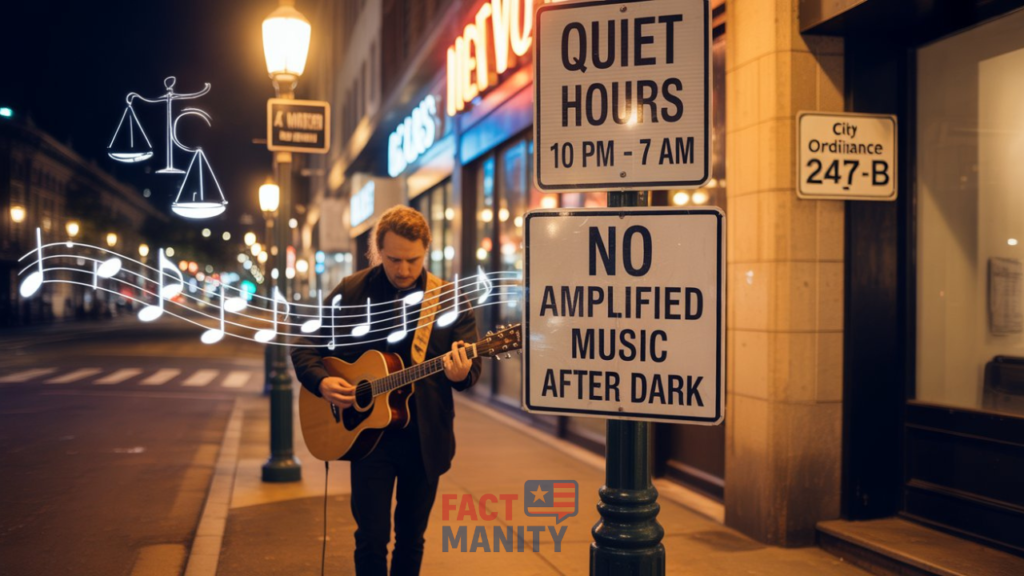
Some towns once had statutes about “loitering” that read like anti-poetry. No singing on sidewalks after midnight, no playing musical instruments in certain locations, and not being able to wear a mask while causing trouble. Most are aimed at public order, but the language gives them an absurd theater-legal vibe.
🏛 Historic Origins and Why They Still Exist?
Temperance, Morality & Food Wars
Many odd laws were born from moral crusades: temperance movements, blue laws, and attempts to keep public spaces “respectable.” Kansas has a long temperance history going back to the 19th century. That era’s lawmakers were vigorous scribblers. They wrote laws to stop folks from drinking, dancing, or eating in a state of moral freefall. These laws linger like a very old casserole.
You can search the Britannica page on Kansas history here.
Farming Culture Meets Urban Growth
Kansas straddles agriculture and city living. Lots of statutes come from a time when towns were surrounded by farms. As cities grew, those rural-focused rules didn’t always get cleaned out.
Result: an ordinance about milk delivery or bulls in town that seems hilarious in an apartment complex but sensible on a 160-acre farm.
Statutory Laziness & Legal Inertia
Legislatures are busy. Repealing an outdated law takes time, votes, and political energy. So many statues stay because no one bothered to remove them. That inertia gives us statutes that sound like they were written for sci-fi extras. The legal code becomes an accidental museum of past anxieties.
Language That Ages Like Milk
Old legal phrasing often used jargon and assumptions that mean less now than then. “Vagrancy” used to be a catch-all for behavior a community disliked. Now it reads like bad poetry and invites eye rolls. But because it’s written in law, the phrase survives like a fossilized attitude.
🚨 How These Laws Affect You Today?
Tourists, TikTokers & Trendy Legal Risks
Ever seen a viral clip of young people doing a dumb challenge in a small town? Sometimes that clip ends with a citation. Content creators occasionally discover that a prank is illegal in ways they did not imagine. A cute downtown fountain dance could become a misdemeanor if local code says no public bathing or dancing in certain zones.
Enforcement Is a Local Sport
Enforcement depends on local cops and prosecutors. Some see odd laws as low priority, some see them as tools to control nuisance behavior. You may get a warning, a laugh, or an actual ticket, depending on personality, precinct mood, and whether it is a tourist weekend.
Real Examples: When Weird Became Real
In one Kansas town a business was fined for operating a vending machine that dispensed certain items at prohibited hours. Not glamorous, but concrete. Another example saw a rooster owner slapped with a fine because neighbors mistook the bird for an unlicensed noise nuisance. Those are not myths… they are a reminder that statutes have teeth.
Legal Advice: It Is Not Always Funny
Most of these laws won’t ruin your life, but ignorance is not a defense. If you plan a public stunt, a roadside barbecue, or backyard livestock, check the municipal code. The awkward midwestern smile will not absolve you in municipal court.
😳 WTF Moment: Weird Laws in Kansas
Imagine explaining to a tourist that Kansas law once banned gambling, dancing, and the wearing of masks… all at the same time. One small town passed a law making it illegal to make “unnecessary noise” before noon.
The phrase sparked a sheriff’s note: “We cannot prosecute someone for humming softly, but if it’s a tuba, we will see you in court.” That is a real line between “common sense” and “you must be kidding me.”
📚 Micro-Stories
1) The Dancer Turned Fugitive (Sort Of)
A college student performed a flash mob near a historic station. The event was stopped because the site was within the prohibited zone. She received a ticket and a perfect story for her resume: “Disrupted local history with interpretive dance.”
2) The Rooster Tinder
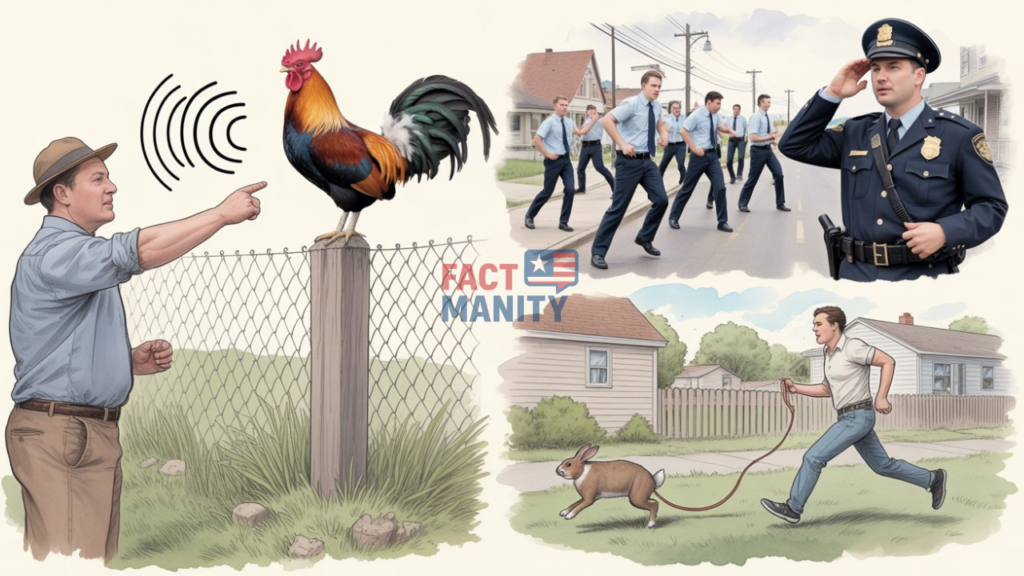
A new homeowner bought a rooster for sustainable living. Neighbors complained. The city code restricted “poultry noise,” leading to a mediation that ended with the rooster being banished to a farm seven miles away. The rooster lived happily, the homeowner joined a local agrarian support group.
3) The Viral Parking Fail
A couple staged “parking lot romance” content under a Kansas highway overpass. Turns out local law forbade loitering that impeded traffic. They were politely escorted away and made a better video about reading local ordinances.
4) The Rabbit Chase
A man once drove through a county fair trying to round up errant rabbits after a petting zoo leak. A sheriff kindly reminded him he could not legally pursue game from a moving car. The rabbits were eventually coaxed back with carrots. Everyone learned a lesson about mobility and patience.
📌 Quick Facts
- Fact: Many “bizarre” laws remain because they were never repealed, not because someone enforces them regularly.
- Fact: Municipal codes vary dramatically between towns… what’s banned in one county is a weekend hobby in the next.
- Fact: Some laws are intentionally vague, creating room for interpretation by local authorities.
- Fact: Kansas has both historical blue laws and modern zoning laws that collide in funny ways.
- Fact: Urban legends often inflate tiny ordinances into “you cannot” myths, always check the municipal code.
You can also browse our full collection of weird US laws by state to see how Kansas compares.
📝 Wrap Up!
Kansas is a place of wide skies, wheat fields, and laws that sometimes read like late-night improv. The existence of these statutes is not an indictment of present-day Kansans… it is an artifact of history meeting bureaucracy.
They are perfect for trivia nights, a little scary for influencers, and a great reminder that laws are written by humans who once feared dancing, masked revelers, and runaway rabbits.
Loved diving into the weird laws in Kansas? Stick around… we are building the internet’s most accurate (and entertaining) library of strange US laws. Bookmark FactManity, explore more states, and discover the bizarre rules Americans have lived with over the years. 🇺🇸✨
Disclaimer: This article is for informational and entertainment purposes only and does not constitute legal advice. Laws and ordinances can change over time and may vary by city or county. Always consult official state statutes, local municipal codes, or a qualified attorney for the most accurate and up-to-date legal guidance.
FAQs
Are these weird laws in Kansas actually enforced?
Sometimes. Many are symbolic or low priority. But enforcement varies by locality, situation, and official discretion. A single complaint plus an officious officer can turn a sleepy ordinance into an expensive lesson.
How can I check if a law in my Kansas town is current?
Search the municipal code online or contact the city clerk. Most Kansas towns publish ordinances and code sections on city websites. If in doubt, ask a municipal attorney or the local dispatch for guidance.
👉Check this LINK for the reference.
Could I really get fined for dancing near a fire station?
Yes, technically. Many of these rules were crafted for safety and nuisance reasons. Enforcement would depend on the town and context. Sneaky weddings might be fine, but a raucous rave less so.
Why don’t lawmakers just repeal these silly laws?
Repealing laws requires time, legislative will, and political capital. Often, these laws sit in the code because no one is bothered enough to push a repeal or the repeal process gets lower priority than pressing issues.
Do other states have similar quirks?
Absolutely. Every state has odd statutes on the books. Kansas is famous for some, but you can find bizarre rules in every state, from turtle curfews to oddly specific dress codes.
Are urban legends about Kansas laws accurate?
Some are based on truth but exaggerated. Urban legends often amplify an obscure ordinance into a sensational myth. Always verify with the actual legal text.
What’s the best way to avoid trouble with local weird laws?
Use common sense, be respectful of neighbors, and check local codes before launching public stunts. If you plan something unusual, call the city and ask for a permit or guidance. It saves money and dignity.