

Introduction
Quirky and Confusing Laws That Only Colorado Could Have sounds like the title of a reality show where the host rides a llama through a municipal courtroom, but these are real head-scratchers. From rules that read like Victorian etiquette to municipal ordinances that survived because nobody bothered to repeal them, Colorado is full of legal relics that make you go, “Wait, what?” Whether you’re a tourist, a law nerd, or someone who likes to shout “dumb laws in colorado” at trivia night, buckle up.
This is a guided tour through statutes, county oddballs, and municipal facepalms that live in the State Code and local legal history.
Below is a breakdown of the strangest, funniest, and most unbelievable laws that Colorado still hasn’t removed from its State Code and municipal ordinances.
Table of Contents
- Colorado’s State Code and municipal ordinances still contain dozens of oddly specific laws.
- Many “weird laws in Colorado” come from old local traditions, mining-town chaos, or forgotten repeal efforts.
- Most aren’t enforced today, but they can still surprise you.
- Colorado’s mix of frontier history + modern regulations makes its legal landscape uniquely quirky.
Also check out some “Weird Laws In Arizona”
👉 Quick Table: Weird Laws in Colorado!
| Type | Example | Where Found |
|---|---|---|
| State law oddity | Restrictions on the sale of vintage moonshine paraphernalia (yes, really) | State Code |
| County quirk | Strange livestock rules in rural counties | Local counties’ ordinances |
| Municipal ordinance | Weird parking or public behavior bylaws | Municipal ordinances |
Quick Answer: Yes, Colorado has some legitimately bizarre laws, a mix of old State Code provisions, city rules, and county-specific oddities. Most are rarely enforced, but they remain on the books and can lead to real WTF moments if you stumble into them.
👉Also check out Real-Life Proof: Recent Media Coverage of Weird Colorado Laws!
Strange and Funny Laws from Colorado
🐎 Livestock & Street Rules: Colorado’s Most Peculiar Animal Laws
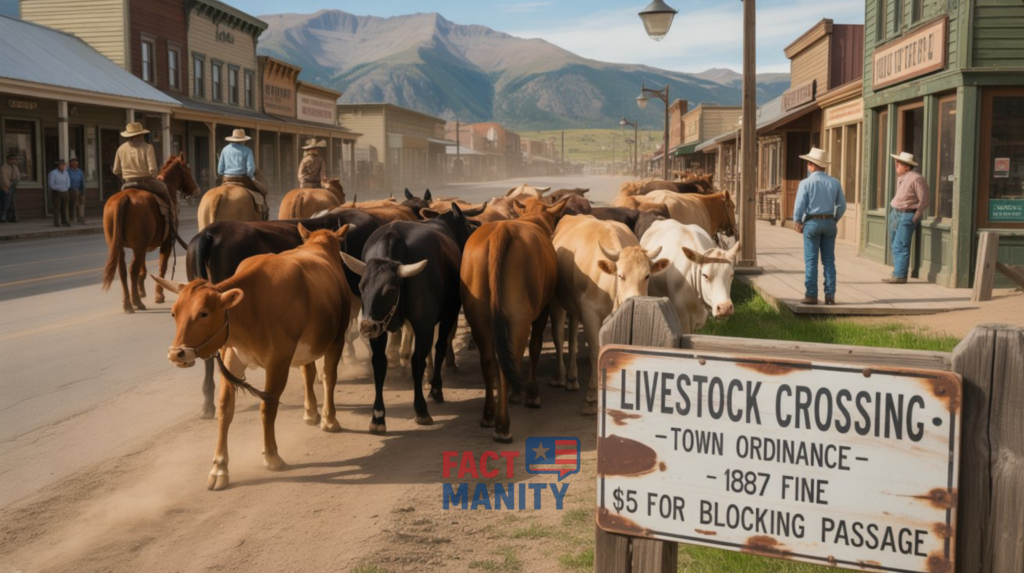
In some rural counties, the laws read like a rancher’s diary. Certain ordinances still regulate which livestock can be tethered on public land, where cows may cross a main road, and even what counts as a household “pet.”
These rules date back to mining-era chaos when animals roamed freely through small towns. While rarely enforced today, they remain part of local legal history… and occasionally make for hilarious misunderstandings.
🩳 “No Underwear in Stores” – The Old Decency Codes (Seriously)
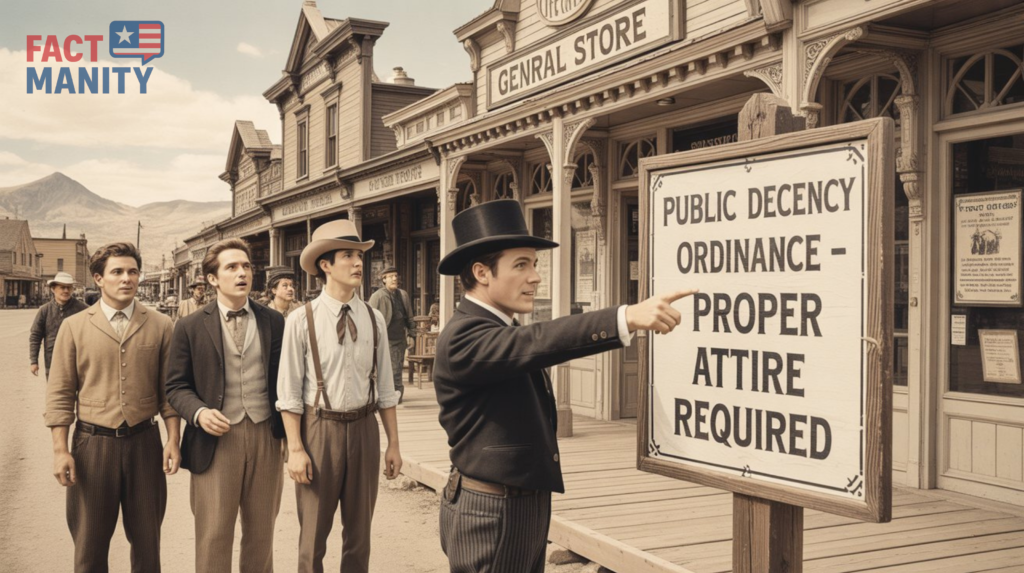
Several Colorado cities still have early-20th-century public-decency ordinances.
Originally created during moral panic movements, these rules technically allow police to cite someone for entering a business “improperly dressed.” One of the weird laws in Colorado.
Are they used today? Almost never.
Do they still exist? Absolutely… preserved through decades of municipal code updates.
County and City Oddities
🎭 Boulder & Telluride: Festival-Law Chaos
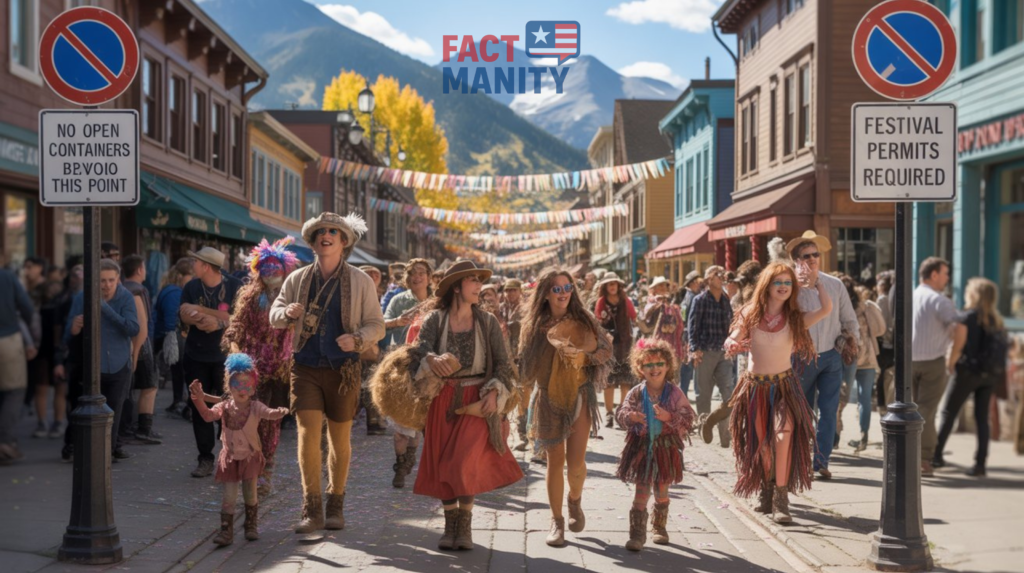
Festival towns have their own flavor of weirdness.
Some local ordinances govern:
- When you can wear costumes
- Where you can sell festival trinkets
- Late-night crowd-control rules
These laws evolved from spring-break crowds, parades, music festivals and sometimes clash with county permit systems, causing legal comedy gold.
🏙 Denver’s Ultra-Specific Ordinances
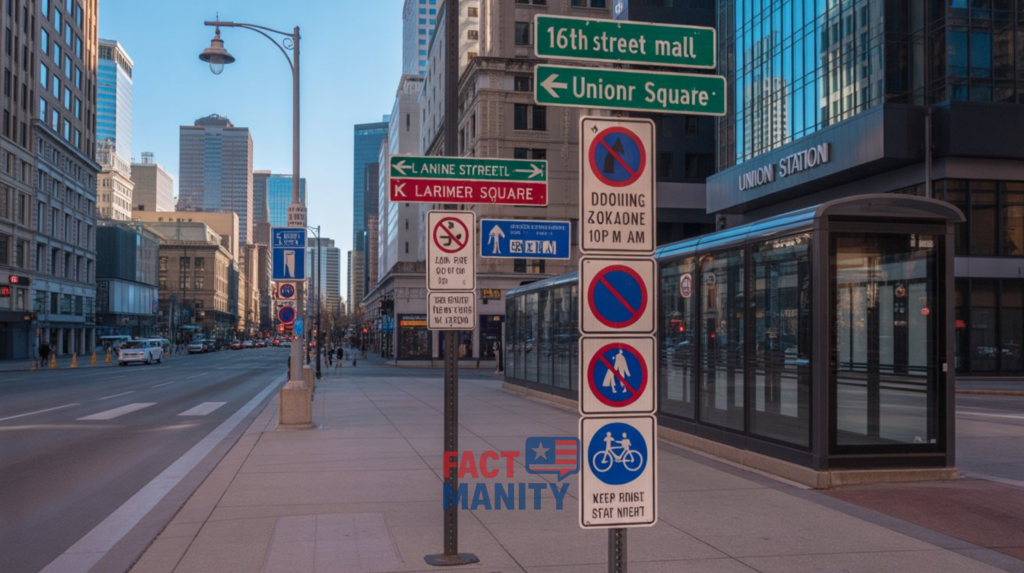
Denver’s municipal code includes:
- Strict sidewalk-use rules
- Extremely detailed noise regulations
- Restrictions on unusual transport types
Urban density created laws opposite from small-town quirks… yet equally funny and oddly specific.
There are some more Weird & Crazy Laws in California. Have a look…!
Historic Roots and Stupid Specifics
⛏ Why Old Laws Survive: A Look at Colorado’s Legal Time Capsule
The Colorado State Code preserves many relic laws from:
- Mining booms
- Railroad expansion
- Temperance movements
- Prohibition-era restrictions
Repealing outdated laws requires legislative action… which rarely happens unless a law causes real problems.
So the bizarre ones continue living rent-free in the Code.
Local Legal History & Why It Matters?
Local legal history explains why certain municipal ordinances exist. A mining boom, a temperance movement, or a freak law passage in the 1920s can leave behind a rule that seems nonsensical today. County records and municipal minutes often show these laws were once practical responses to very specific problems.
😳 WTF Colorado Moments
The Moonshine Sign That Outlived Prohibition
Once upon a time, a statute regulating the manufacture and sale of alcoholic beverages included odd clauses about distilling equipment and advertising. In some counties, the language was so specific that a roadside vendor selling vintage copper stills was technically violating a state law. A WTF moment?
Absolutely. The thing is, these clauses are relics of a time when distilling was a bigger public policy concern than craft cocktails.
A decades-old alcohol-regulation clause once made it technically illegal to sell vintage distilling equipment. One roadside antique vendor had to relabel everything “for display only.”
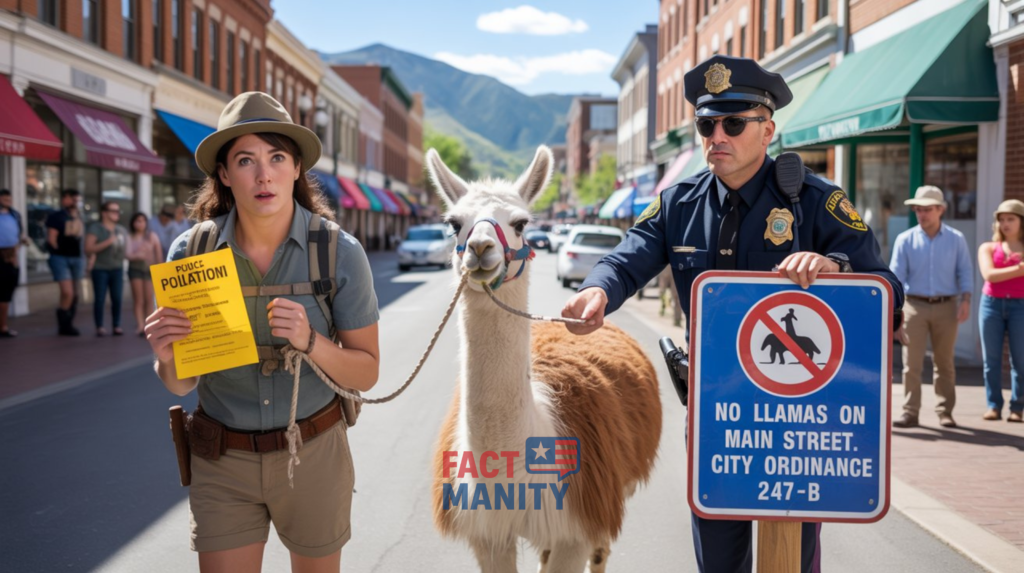
The Llama Parade Rule
In one town, laws warn against leading pack animals through downtown during peak hours.
A hipster + llama + police citation? It has actually happened.
📌 Micro Stories (Real Small-Town Moments)
Tiny true tales that prove life imitates a bad movie:
- The Tourist & the Goat: A visitor posed with a goat tied in the wrong place — and received a friendly citation later canceled.
- The Costume Vendor Fiasco: In a small festival town, a municipal ordinance required permits for sales while wearing a costume. A clown vendor learned about permits the hard way and now sells hats instead.
- Denver’s Midnight Yodeler: A Denver resident was fined for “amplified sound” at 2 a.m. He claimed he was practicing yodeling. The ticket stood because noise ordinances are real and they are brutally specific.
- The Antique Still Vendor: A hobbyist selling antique distilling parts discovered a state-level prohibition and had to petition county officials for clarification. He now sells lawn ornaments labeled “for decorative purposes only.”
⚡ Quick Facts
- State law vs Municipal ordinances: State laws in the State Code apply broadly, while municipal ordinances and county codes govern local specifics.
- Enforcement: Many odd laws are technically enforceable but rarely targeted unless they intersect with public safety.
- Comparison: The Southeast U.S. has its own share of quirky statutes, but Colorado’s combination of frontier legacy and progressive cities produces a unique legal stew.
- Repeal challenges: Removing an outdated law often requires a legislative sponsor or local council action, plus momentum — which is why weird rules persist.
Final Thoughts 💡
Colorado’s weird laws are more than punchlines… they’re snapshots of its past. While most are harmless holdovers, they show how history, culture, and community priorities evolve over time. If you ever get cited for a goat, a llama, or a noise violation involving yodeling.
Remember: In Colorado, the law may be weird, but the stories are priceless. Read some more strange facts about Arkansas!
Enjoy learning about America’s strangest laws? Follow FactManity for weekly deep-dives into bizarre statutes, forgotten rules, and unbelievable stories from across the U.S. Drop a comment below if you like this article based on “Weird Laws in Colorado“. Stay Tuned!
Disclaimer: This article is for informational and entertainment purposes only and does not constitute legal advice. Laws and ordinances can change over time and may vary by city or county. Always consult official state statutes, local municipal codes, or a qualified attorney for the most accurate and up-to-date legal guidance.
FAQs
Are these weird laws in Colorado actually enforced?
Some are enforced, but most are not actively policed. Enforcement depends on context: public safety issues, complaints from neighbors, or municipal focus can bring an obscure ordinance to life. The State Code provides the backbone for enforcement, but local counties and municipal ordinances trigger many of the oddball citations.
How can I find out if a law applies in my city or county?
Check the city’s municipal code online and your county’s ordinances. For statewide rules, search the State Code. Many local governments publish searchable code libraries. If you are in doubt, contact the municipal clerk or local county commissioner – they can point you toward the relevant sections of local legal history and current regulation.
Read more about “Colorado Judicial Branch – Local County Rules”
Why do weird laws in Colorado stay on the books?
Repeal requires effort: a legislator or city council member must sponsor the change, and it must pass. Often these laws are harmless, low priority, or forgotten. Local legal history shows that many originated from specific events that no longer apply, yet they linger because no one pushed to update the text.
Are there serious consequences to violating these weird ordinances?
Yes and no. Many are misdemeanors or civil infractions with fines. Others might intersect with state-level crimes if they involve safety risks. The practical consequence often depends on whether someone complains or a law enforcement officer decides to act. Always assume a law on the books could be enforced, however unlikely.
Do other states have similar odd laws?
Every state has peculiar statutes and municipal ordinances. The Southeast U.S. has its share of colorful rules, but Colorado’s mix of frontier roots, mountain culture, and modern municipal governance yields a distinctive set of oddities. The difference is often in the origin story: mining, railroads, or moral panics versus agricultural or trade-specific issues elsewhere.
How can citizens get a weird law repealed?
Start local. Petition the city council or county board with evidence of why the law is obsolete or harmful. For state code items, contact your state representative or senator. Building a coalition and showing practical reasons to repeal and alternatives… makes repeal attempts more likely to succeed.
Can I use a weird law as a legal defense?
Possibly, but it depends. Some defenses hinge on ambiguity or lack of applicability. Lawyers often look to legislative intent and local legal history to argue a law should not apply. Relying on a weird law as a shield without counsel is risky; consult an attorney if you face charges related to obscure statutes or municipal ordinances.
Want to check your local rules? Visit your city’s municipal code website or contact the municipal clerk or county commissioner to confirm whether any quirky ordinances apply where you live.
[…] As this article is based on dumb, strange and weird laws in Connecticut, also have a look on the Crazy & Weird laws in Colorado. […]
[…] isn’t unique to Maryland, similar historically reactive laws can also be found in places like weird laws in Colorado, where old statutes still confuse modern […]