

🤯📜 Introduction
Imagine opening a rulebook and finding laws so strange that even adults scratch their heads. Now imagine those rules are real… and they exist in Maine. From lobster-related regulations to oddly specific public behavior laws, Maine’s legal history is full of surprises that sound more like jokes than serious rules.
States across America have similar legal oddities… for example, some of the strange statutes found in Weird Laws in Louisiana are just as surprising.
These weird laws in Maine didn’t come from nowhere. Most were written long ago when towns were small, problems were local, and lawmakers reacted fast, sometimes without thinking how the rule would sound 100 years later. Today, many of these laws remain quietly written in old legal books, even if no one follows them anymore.
In this article, we break down Maine’s strangest and dumbest laws in a fun, simple way that anyone can understand… even a 10-year-old. No legal jargon. No boring explanations. Just real stories, surprising rules, and the history behind them. Let’s explore the weird side of Maine together.
✅ Key Takeaways
- ✅ Maine has genuinely strange laws, many rooted in real historical problems.
- ✅ Some statutes remain on the books simply because no one repealed them.
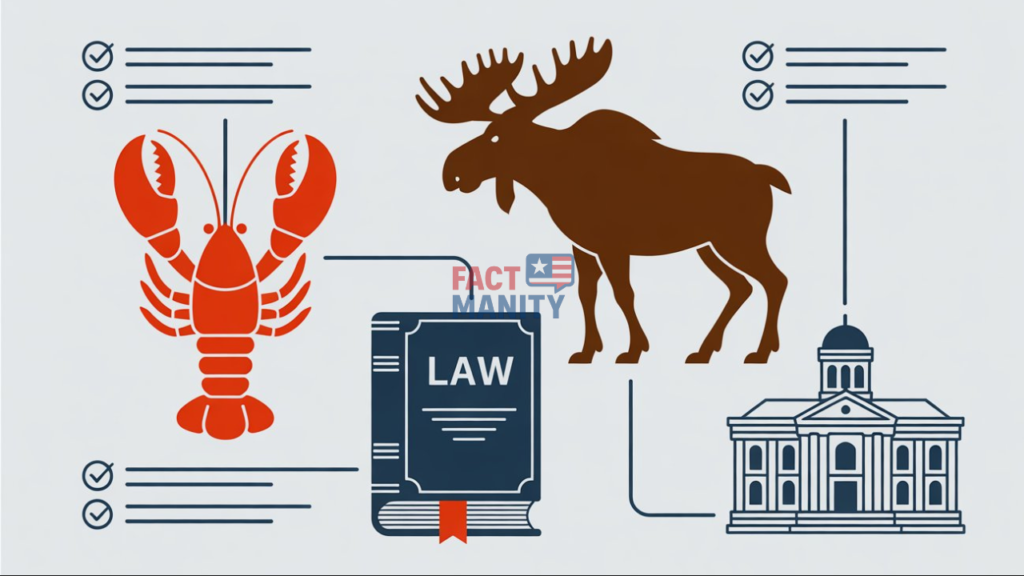
- ✅ Animal-related rules, especially involving lobsters and moose, dominate Maine’s legal oddities.
- ✅ Most laws are no longer enforced, but technically still exist in legal codes.
- ✅ These weird laws reveal how reactive and personal early local governance could be.
Table of Contents
👉 Quick Table: Weird Laws in Maine
| Category | Example | Why It Exists |
|---|---|---|
| Animal-related | Lobster size rules, moose-related restrictions | Lobster size rules, moose-related restrictions |
| Public behavior | Whistling bans, ice cream cone rules (historical) | To control noise and public nuisance |
| Local ordinances | Hat rules, park behavior laws | Created due to small-town disputes |
| Historic leftovers | Unrepealed 1800s statutes | Never updated or removed |
These laws are based on historical records and municipal codes.
Quick Answer: If you’re searching for the “Maine dumb laws” or the “weird laws in Maine,” you’ll find a mix of antiquated local ordinances and odd statewide statutes. Most are more hilarious than harmful, but a few deserve a raised eyebrow and a legislative repeal petition.
🦞⚖️ The Most Bizarre Legal Rules in Maine

The Lobster Laws That Make You Gasp
If you thought Maine’s relationship with lobsters was all romance and butter, think again. Lobsters are effectively the state’s unofficial royalty, and for good reason: they supported towns, fed families, and were worth money. So state law historically treated them with unusual seriousness.
Example: There have been regulations about the size of lobster traps, where you can haul them, and how you must measure a lobster before shipping. These aren’t just quirky… they’re practical, aimed at sustainability. Still, the idea of the government dictating who can touch a crustacean feels, well, dramatic.
Moose & Marriage – Not a Romantic Combo!
Maine is moose country, but there’s a legal line between admiration and officiating nature. Historical statutes have odd phrasing warning against marrying animals or engaging in bestiality-type acts. These are more moral safeguards than practical policy, but they read like a cautionary tale: don’t try to wed a moose in the woods.
Real example: while the state has clear prohibitions, local folklore joked about eloping with a bull moose for luck. Legislators probably laughed and then wrote explicit bans just in case.
👉 Read more about Library of Congress legal archives
🕰️📚 Historic Maine Laws That Still Exist

Whistling & Singing Regulations
Some towns once passed ordinances limiting late-night singing or whistling. Why? Because someone practiced the piccolo at 2 a.m., and thus a law was born. These kinds of rules often persist simply because no one has bothered to remove them.
These laws read like the micro-complaints of sleepy communities… practical in context, ridiculous in retrospect.
If you think Maine is unusual, Colorado’s legal history includes its own collection of bizarre and outdated laws.
Public Conduct That’s Uncomfortably Specific
There are records of restrictions about where you can carry certain objects or how close you can stand near a public building. These come from eras where visible items implied disorder or moral danger. Modern enforcement is rare, but the ink remains on the statute books.
Fun fact: Some ordinances were actually attempts to curb nuisance behaviors… ducks in downtowns, people loitering with bad intentions and the fix was a very narrow prohibition.
👉 Read more about Maine state statutes
🏘️📜 Weird Local Ordinances Across Maine

The Curious Case of Local Ordinances
Small towns in Maine are black holes of quirky rules. When a neighborhood feud escalated in 1907, a local council passed a bylaw that no one under 21 could wear a hat in a park. Ridiculous? Yes. Enforced? Unclear. Still, that bylaw sat in dusty town records for decades.
Local ordinances often reflect the immediate, petty, or practical needs of a moment and then they outlive their usefulness like a VHS tape at a streaming party.
👉 Check out Maine municipal codes
Zoning Rules That Sound Like Medieval Edicts
Zoning laws can sometimes read like feudal decrees. “You may not keep more than two goats within town limits” or “no one shall build a windmill taller than the church steeple”… these rules were created to preserve aesthetics or property values and they can be oddly moralistic.
Yes, some towns still have limits that would confuse any modern tiny-house enthusiast.
🤨🚨 The Most WTF Laws in Maine
Here is the part where you sit back and ask, “Who thought this was necessary?” In one historical Maine statute you could be fined for being “boisterous” on a town common… a word so subjective it could include your enthusiastic rendition of “Sweet Caroline.”

The law didn’t define boisterous, which meant enforcement depended heavily on the mood of the local constable. Imagine the power trip.
🎭📖 Real Stories Behind Weird Laws in Maine

1) The Picnic Police: In a coastal town, picnic-goers once faced an ordinance against setting up chairs on the boardwalk after dusk. Town council claimed it was for safety, locals suspected it was to keep teenagers from skinny-dipping.
2) The Lobster Heist: A fisherman once got arrested for hauling lobsters with unmarked traps. The twist: he claimed the lobsters were trying to unionize. No, seriously… tempers flared, debts were paid, and the case became a local legend.
3) The Singing Streetlamp: An organ grinder parked under a streetlamp and played saxophone at midnight. A neighbor complained. The city passed a “public disturbance” rule that specifically mentioned musical devices. The organ grinder switched to an accordion and kept playing. Art prevails.
👉 Read more about some from official site: historical Maine law records
📌 Quick Facts About Weird Laws in Maine
- Maine’s lobster regulations are among the earliest examples of conservation law in the U.S.
- Many odd laws date to the 1800s and early 1900s when local governance was reactive and highly personal.
- Some towns still carry archaic ordinances simply because no one has proposed removing them.
- The phrase “weird laws in Maine” shows up in travel guides as a reason to visit for curious tourists.
Curious readers can explore more strange statutes from across the country in our dedicated collection of U.S. weird laws.
🙄💡 Final Thoughts
Maine’s legal landscape is a museum of human priorities, anxieties, and comic overreactions. The “Strangest and Dumbest Laws Ever Passed in Maine” are less about the state’s incompetence and more about the human story: people trying to solve specific problems with the tools they had. Sometimes those tools were brilliant… sometimes they were blunt and absurd.
Enjoy discovering strange, outdated, and downright hilarious laws like these?
Maine is just the beginning. Every U.S. state has its own collection of bizarre rules, forgotten ordinances, and legal leftovers that sound unbelievable… but are surprisingly real.
👉 Explore more Weird Laws, Shocking Facts, and Hidden American Oddities across the country right here on FactManity. From funny state laws to creepy historical rules, we break it all down in a simple, entertaining way anyone can understand.
If you found this guide helpful (or laugh-out-loud strange), bookmark FactManity, share it with a friend, and check back often… new US-based weird laws and facts are added regularly.
Disclaimer: This article is for informational and entertainment purposes only and does not constitute legal advice. Laws and ordinances can change over time and may vary by city or municipality. Some examples discussed are historical or rarely enforced. For the most accurate and up-to-date legal information, consult official Maine state statutes, local municipal codes, or a qualified attorney.
FAQs ❓
Are weird laws in Maine still enforced?
Most are not enforced today. Many exist only because they were never officially repealed, but enforcement is rare unless public safety is involved.
Can you really get fined for an old Maine law?
Technically yes, if the law still exists. In reality, most police and courts focus on modern laws, not outdated statutes.
Why does Maine have so many strange laws?
Many laws were written to solve specific problems in small towns or historical situations that no longer exist today.
How can I check if a Maine law is real?
Visit official Maine state or municipal code websites, or contact local government offices directly.
Can citizens remove weird local laws?
Yes. Residents can petition town councils or lawmakers to repeal or update outdated ordinances.
[…] bizarre statutes appear across the country… for example, some of the odd rules found in weird laws in Maine are just as confusing and historically […]