
⭐ Introduction
Imagine opening a rulebook and finding laws that sound like jokes but aren’t always. That’s exactly what happens when people search for weird laws in Maryland. Some rules are real, some are outdated, and others are internet myths that refuse to disappear.
Maryland’s laws come from a long history of town rules, safety concerns, and old-fashioned thinking. Over time, the reasons behind them faded but the strange wording stayed. This article helps you understand which Maryland laws are true, which are misunderstood, and why they still confuse people today. No legal jargon. No boring explanations. Just clear answers anyone… even a 10-year-old can understand.
Similar bizarre statutes appear across the country… for example, some of the odd rules found in weird laws in Maine are just as confusing and historically layered.
🔥✅ Key Takeaways
- Maryland’s weird laws are a mix of outdated statutes, misunderstood ordinances, and viral legal myths.
- Many so-called “dumb laws in Maryland” are not statewide rules but old local or municipal regulations.
- Historical context explains why certain laws sound bizarre when read today.
- Most strange Maryland laws are rarely enforced unless public safety or nuisance issues arise.
- Verifying laws through official state or local codes helps separate fact from internet folklore.
🙌 Quick Reference Table: Weird Laws in Maryland
| # | The Law | Where | Still Active? | Enforce Risk |
|---|---|---|---|---|
| 1 | Fortune tellers need a $1,000 license + fingerprints | Calvert County | ✅ County Code | 🔴 Real |
| 2 | Throwing hay from 2nd floor window = $20 fine | Baltimore City | ✅ Baltimore City Code | 🔴 Real |
| 3 | Taking a lion to the movies is illegal | Baltimore | ✅ City Ordinance | 🟡 Rare |
| 4 | Cursing inside city limits is banned | Rockville | ✅ Municipal Code | 🔴 Real |
| 5 | Baby chicks cannot be sold near Easter | Statewide | ✅ MD Agriculture Code | 🔴 Real |
| 6 | Spitting on city sidewalks is prohibited | Baltimore | ✅ Baltimore City Code | 🟡 Rare |
| 7 | Sleeveless shirts banned in public parks | Baltimore | ✅ Park Rules | 🟡 $10 Fine |
| 8 | Searching husband’s pockets while he sleeps = crime | Statewide | ✅ Historical Statute | 🟢 Low |
| 9 | Jackass services must be documented in writing | Statewide | ✅ MD Agriculture Code | 🟡 Rare |
Quick Answer: Yes, Maryland has its share of bizarre-sounding statutes, but many of the viral “dumb laws in Maryland” are misunderstood, outdated, or local ordinances stretched to absurdity.
Want the cliff notes? Some rules are real, most are rarely enforced, and a few never existed outside an early 1900s newspaper column.
🤯 9 Weird Laws in Maryland – Explained Like They Actually Matter!
Maryland is one of America’s oldest states. It was founded in 1632. That means its legal code has had nearly 400 years to accumulate rules, some brilliant, some sensible for their time, and some that make you stop mid-sentence and read them twice.
What follows is every law on this list verified against real sources. No internet myths. No recycled lists. Just Maryland’s actual legal code, explained plainly.
🔮 Law #1: Want to Read Palms in Calvert County? That’ll Be $1,000. And Your Fingerprints.
Source: Calvert County, Maryland Code of Ordinances
Fortune tellers, palm readers, and soothsayers operating in Calvert County, Maryland must apply for a business license through the clerk of court, pay a $1,000 license fee, submit to fingerprinting, be photographed by state police, and obtain a certificate proving they have never been convicted of any crime beyond a minor traffic infraction.
The license is only valid for three months.
If you practice without one, you face up to six months in jail and a fine between $100 and $500.
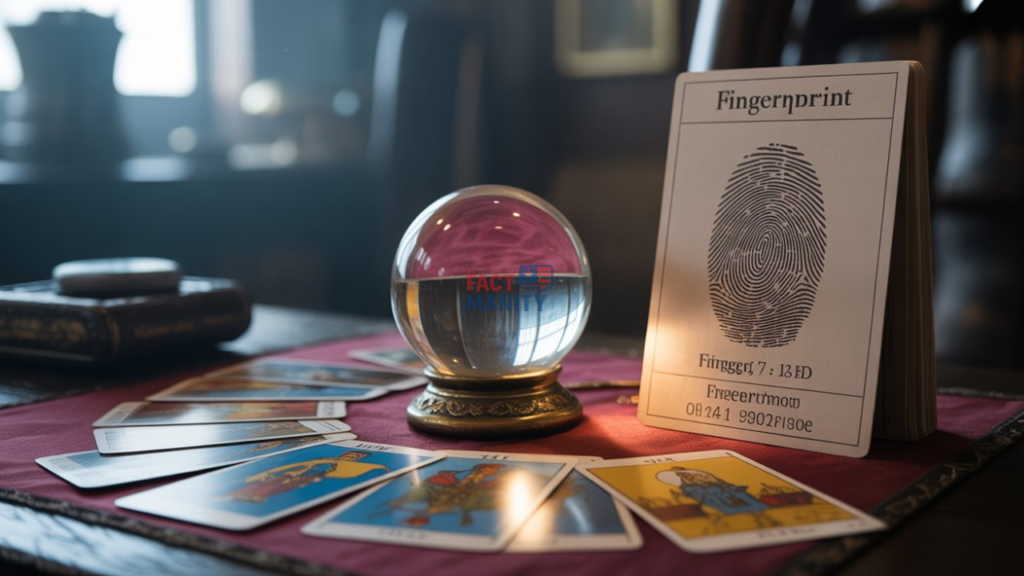
This is not a joke. It was reported by the Baltimore Sun in September 2025 as one of the laws still on Maryland’s books that lawmakers have not gotten around to removing.
The origin of the law is consumer protection, Calvert County had documented cases of residents being defrauded by people charging significant sums for “spiritual services” with no accountability. The county responded by treating fortune telling as a regulated profession. A heavily, unusually regulated profession.
The result is a licensing requirement that is simultaneously more rigorous than the process for getting a driver’s license and less permanent than one.
Why it still matters: If you’re in Calvert County and you consider yourself spiritually gifted… get licensed first. The misdemeanor on the other end is real.
Check out Maryland General Assembly Official Legal Code
🌾 Law #2: Throwing Hay From a Second-Floor Window in Baltimore Will Cost You $20
Source: Baltimore City Code
Baltimore has a specific ordinance that prohibits throwing bales of hay from second-story windows within city limits. The fine is $20.
The law was not written as a prank. In the 19th and early 20th centuries, Baltimore was a working city with active warehouses, stables, and commercial buildings that stored livestock feed. Workers would routinely toss hay bales from upper-floor storage down to street level directly into pedestrian traffic, onto carriages, and occasionally onto people.
The city wrote it down, set a fine, and moved on. Nobody ever removed it.
Today the law exists as a record of how seriously Baltimore once took its hay logistics. The $20 fine, however, has not been adjusted for inflation since it was written which means if you are in Baltimore, have access to a second-floor window, and inexplicably have a bale of hay… you could technically do it for less than the cost of a parking ticket.
Not recommended. But technically cheap.
🦁 Law #3: You Cannot Take a Lion to the Movies in Baltimore
Source: Baltimore City Ordinance
Baltimore city code prohibits taking a lion into a movie theater.
This law sounds like an internet fabrication. It is not. It appears in Baltimore’s historical municipal ordinance records and unlike many “weird laws” that circulate online without any real citation, this one has been traced to actual city code by multiple Maryland journalists and legal researchers.
The reasoning is not explained in the ordinance itself, which makes it significantly more interesting. There is no context. No preamble. No “whereas a lion caused the following incident.” Just the prohibition, stated plainly.

The most likely explanation is that Baltimore like many American cities in the late 1800s had traveling circuses, animal exhibitions, and exotic animal shows passing through regularly. Bringing a performing animal into a public entertainment venue created genuine crowd control problems. The city generalized the prohibition to include lions specifically, possibly after an incident, possibly preemptively.
The specific singling out of lions, rather than tigers, bears, or other large predators, remains unexplained.
Reality check: There are currently no licensed lions in Baltimore city limits. This law has not been tested in living memory. It remains on the books regardless.
🤬 Law #4: Cursing in Rockville, Maryland Can Get You Arrested
Source: Rockville, Maryland Municipal Code
Rockville has a municipal ordinance that bans the use of profanity within city limits. The law covers obscene or offensive language used in public spaces.
This type of ordinance is more common in Maryland than most people realize, Rockville’s version is one of the better-documented examples. It falls under the same category as Michigan’s public swearing law (MCL 750.337)… a 19th-century public decency measure that was never formally repealed.
In practice, Rockville’s cursing ban is almost never used as a standalone charge. It tends to appear as an add-on in disorderly conduct situations someone already causing a scene who happens to also be profane.
But the law exists. And in the wrong situation, it can be applied.
For context: Rockville is the county seat of Montgomery County, one of the most educated and highest-income counties in the United States. The cursing ban sits in the same municipal code as regulations governing luxury residential developments and biotech corridor zoning. Maryland contains multitudes.
🐣 Law #5: You Cannot Sell Baby Chicks Near Easter
Source: Maryland Agriculture Code + Multiple City Ordinances
Maryland law prohibits the sale, barter, or gifting of chickens, ducklings, and other fowl under three weeks old. Several Maryland municipalities extend this ban specifically to the period around Easter, citing the well-documented pattern of families purchasing baby chicks as Easter gifts, animals that then get abandoned or die within weeks because the buyers had no idea how to care for them.
This law is completely real and is currently enforced. The Baltimore Sun cited it as recently as September 2025 in a roundup of active Maryland laws.

The practical reason behind it is straightforward: baby fowl require specific temperature regulation, specialized feed, and careful handling. Impulse purchases of Easter chicks, particularly sales to children… resulted in documented animal welfare problems that Maryland legislators decided to address directly.
What makes it strange is the seasonal specificity. Maryland drew a legal line between selling a chick in January (technically restricted by the under-three-weeks rule anyway) and selling one the week before Easter (explicitly flagged as a pattern requiring extra attention).
🤧 Law #6: Spitting on the Sidewalk in Baltimore is Illegal (But the Street is Fine)
Source: Baltimore City Code
Baltimore has a specific ordinance that distinguishes between two types of spitting: on a city roadway (permitted) and on a city sidewalk (illegal).
This is not a general anti-spitting law. It is a law with a very deliberate geographic distinction. The road: fine. The sidewalk: not fine.
The origin is public health. In the late 19th and early 20th centuries, tuberculosis was spreading rapidly through American cities, and public health officials identified sidewalk spitting as a direct transmission risk, particularly in high-traffic pedestrian areas. Roads were considered lower risk because foot traffic was lighter and drainage was different.
Baltimore’s code made the distinction, set the prohibition, and has never cleaned it up.
The result is a law that rewards the technically-minded. In Baltimore, if you absolutely must spit in public… step off the curb first. Legally speaking, you’re fine.
🎽 Law #7: Sleeveless Shirts Are Banned in Baltimore Parks
Source: Baltimore City Park Rules
Baltimore’s city park rules include a provision that prohibits wearing sleeveless shirts in public parks. The fine is $10. The rule specifically applies to joggers who go shirtless as well.
This rule has been cited in multiple Maryland legal roundups as one of the city’s more surprising active ordinances. It originates from an era when public parks were treated as formal civic spaces… dress codes were common, and Baltimore’s parks department enforced standards of appearance that reflected the social norms of the time.
Nobody goes to Baltimore city parks today expecting a dress code check. But the rule is technically there, the fine is technically real, and the right park official in the wrong mood could technically enforce it.
Practical note for 2026: Baltimore’s parks are heavily used by runners, fitness groups, and summer visitors who are, by and large, wearing whatever they want. Enforcement of this specific rule has not been documented in recent memory. But unlike some laws on this list, it has not been formally repealed either.
👖 Law #8: Searching Your Husband’s Pockets While He’s Asleep is Illegal
Source: Maryland Historical Statute
Maryland has a law on the books that makes it illegal for a wife to search her sleeping husband’s pockets.
This one requires historical context to understand and that context makes it more interesting, not less.
The law originates from property law frameworks that predated modern marriage legislation. In 19th-century Maryland, a husband’s personal property including his pockets and their contents was legally his alone. A wife accessing that property without his consent or knowledge was considered a form of theft or unauthorized search under the property laws of the time.
The law was written to protect male property rights within a marriage structure that treated husbands and wives as legally distinct entities with unequal property claims.
Today it reads as a relic of an era that most Americans would rather not return to. But “reads as a relic” and “has been formally repealed” are still not the same thing in Maryland’s legal code.
The honest reality: No Maryland prosecutor is charging anyone under this statute in 2026. The law is functionally dead. But it sits in the code as a reminder of how recently American property law treated marriage as a transaction with very specific rules about whose belongings were whose.
🐛 Law #9: Any Services Performed by a Jackass Must Be Documented
Source: Maryland Agriculture Code
Maryland law requires that any services performed by a jackass… the proper term for a male donkey, must be documented in writing.
This law is real. It appears in Maryland’s agricultural code and was designed to regulate the breeding industry. A jackass used for stud services breeding with female donkeys or mares to produce mules represented a commercial transaction with a specific outcome: an animal whose bloodline, ownership, and commercial value depended on accurate records.
Maryland’s agricultural economy in the 19th century relied heavily on mules for farm labor. Mules cannot reproduce, so every mule required a fresh breeding arrangement. Tracking which jackass serviced which animal was not bureaucratic pedantry, it was essential record-keeping for an industry that moved the state’s economy.
The law still exists in updated agricultural code. Today, it mostly applies to licensed breeding operations. But the original, very specific language requiring documentation of jackass services… has survived every revision process intact.
📜 Why These Weird Maryland Laws Exist: Historical Context Explained
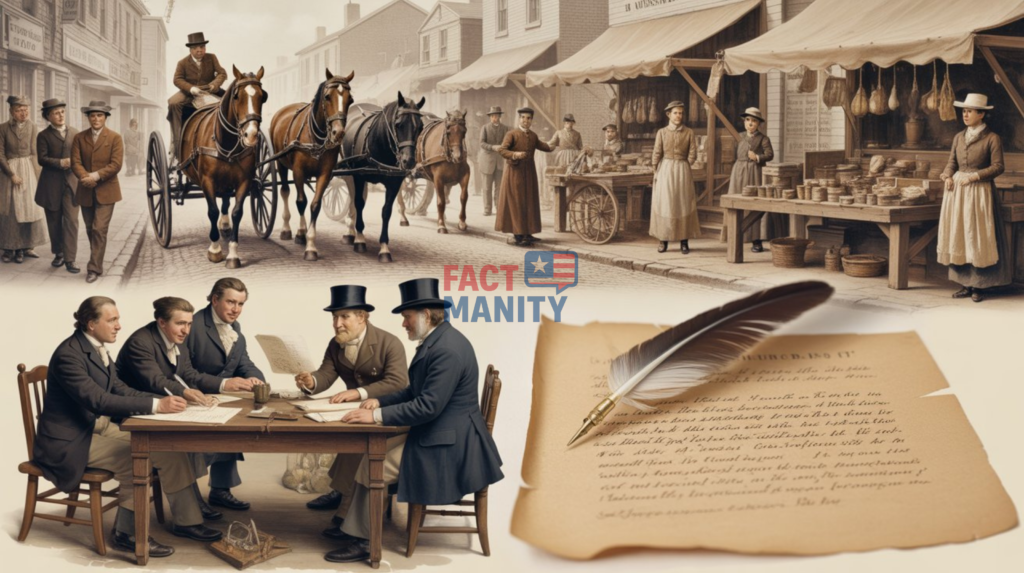
From Horse Paths to Highways: Evolution of Municipal Rules
Maryland cities once regulated horse droppings, barn locations, and stray chickens. Those rules either got repealed or remained on the books as relics. When websites scrape old statutes without historical context, you get a headline like “Forbid feeding pigeons while wearing a fez,” which sounds like satire but is just poor historical editing.
👉 Read more information about historical legal context.
Public Safety VS Peculiarity: The Practical Origins
Many odd-sounding laws started as practical responses: riots, epidemics, and unregulated street vendors. For example, restrictions on masks, gatherings, or impromptu market tables had real intent… public order. Over a century, the reason behind the rule is lost and only the weird phrasing remains.
Language That Ages Badly
Legal language in the 1800s and early 1900s often used colorful, now-antiquated terms. Combine that with modern social media, and the result is a viral claim that Maryland forbids “singing tavern ditties while standing on one foot,” which is more a language translation problem than a legislative decision.
This pattern isn’t unique to Maryland, similar historically reactive laws can also be found in places like weird laws in Colorado, where old statutes still confuse modern readers.
📌 Quick Facts About Maryland Laws
📌 Quick Facts — Weird Laws in Maryland
- ✦Calvert County fortune tellers must pay $1,000, get fingerprinted, and renew every 3 months
- ✦Baltimore’s hay-throwing fine ($20) has never been adjusted for inflation since it was written
- ✦Maryland’s baby chick ban near Easter was cited by the Baltimore Sun as recently as September 2025
- ✦Spitting on Baltimore sidewalks is illegal — but spitting on the road is technically fine
- ✦Maryland’s full legal code is searchable at mgaleg.maryland.gov
This trend of outdated local ordinances mirrors what we’ve documented in weird laws in Idaho, where many strange rules survive simply because no one repealed them.
🧠 Final Thoughts
Maryland’s legal landscape is a delightful blend of the practical, the archaic, and the absurd when read out of context. If you’re hunting for “dumb laws in Maryland,” enjoy the theater. Do your homework before trying to stage a protest with a cow, a clown mask, or a seafaring band. Many of these statutes are relics, some are real but rarely enforced, and a few are simply internet folklore.
👉 Explore more strange laws, shocking facts, and hidden American oddities right here on FactManity.
Curious about strange laws in other states? Explore our growing collection of weird U.S. laws and uncover the stories behind America’s most confusing and fascinating rules. You might be surprised how many myths you’ve believed.
Disclaimer: This article is for informational and entertainment purposes only and does not constitute legal advice. Laws and ordinances can change over time and may vary by city or county. Always consult official Maryland statutes, local municipal codes, or a qualified attorney for the most accurate and up-to-date legal guidance.
FAQs
Can old Maryland laws still get you in trouble?
Technically yes, but enforcement is uncommon unless safety or disturbance issues arise.
Read more about “constitutional protections”.
Why do weird law myths spread so fast?
Because exaggerated headlines and outdated wording make perfect viral content.
Should tourists worry about breaking strange laws?
Not usually. Follow common sense, local signage, and public safety rules.
What is the most enforced weird law in Maryland?
The baby chick sale restriction near Easter is one of the most consistently enforced Maryland’s Department of Agriculture actively monitors holiday pet sales. The Calvert County fortune teller licensing requirement is another that carries real criminal penalties for violations.
Where can I verify Maryland’s laws myself?
Maryland’s complete General Assembly code is publicly searchable at mgaleg.maryland.gov. For city-specific ordinances like Baltimore’s hay-throwing ban or Rockville’s cursing prohibition, check municode.com and search by city name.