

🗽 Introduction
New York is famous for its towering skyscrapers, yellow taxis, Broadway shows, and food that never sleeps. But beneath the bright lights and fast pace lies something far more unexpected… a collection of laws so strange they sound like urban legends. Some are genuine regulations meant to solve oddly specific problems, while others are outdated rules that somehow survived decades of legal changes.
From rules about feeding pigeons to fines for letting your car idle too long, weird laws in New York often reveal the quirky side of city governance. These laws didn’t appear randomly… most were created in response to real situations that once annoyed residents, threatened public safety, or simply caused chaos in crowded neighborhoods.
If you’ve ever wondered why certain oddly specific rules exist in a city that prides itself on freedom and expression, you’re about to find out. Some of these laws still affect everyday life in New York today, while others remain as fascinating historical leftovers that make visitors say, “Wait… that’s actually a law?”
New York is just one example of the weird laws across the United States that continue to surprise people today.
🔥 Key Takeaways
- ✔ New York has a mix of real strange laws, outdated statutes, and viral myths.
- ✔ New York City enforces modern rules like vehicle idling fines to reduce pollution.
- ✔ Feeding pigeons may result in fines in certain parks or housing areas.
- ✔ Historic laws sometimes remain on the books even when rarely enforced.
- ✔ Urban legends about bizarre laws often spread online but are not legally real.
- ✔ Local enforcement can vary depending on neighborhood complaints and municipal codes.
Table of Contents
📊 Quick Reference Table: Weird Laws in New York
| Category | Example | Why It’s Odd |
|---|---|---|
| Public Conduct | Pigeon-feeding restrictions | Targets a city hobby that somehow became illegal |
| Traffic | Vehicle idling fines | Small delays can cost you in the city |
| Myths | Ice cream cones in pockets (apocryphal) | Popular urban legend, not a live statute |
Quick Answer: Yes, New York has truly weird laws… some are ancient relics, some are modern public-safety rules dressed in bizarre language, and some are just myths people keep repeating. The real danger is not the clownish statutes but the confusion when a visitor assumes a weird rule is a joke and gets a ticket.
🤯 Strange & Weird Laws in New York
🐦 Feeding the Birds: Pigeons, People, and Patrols
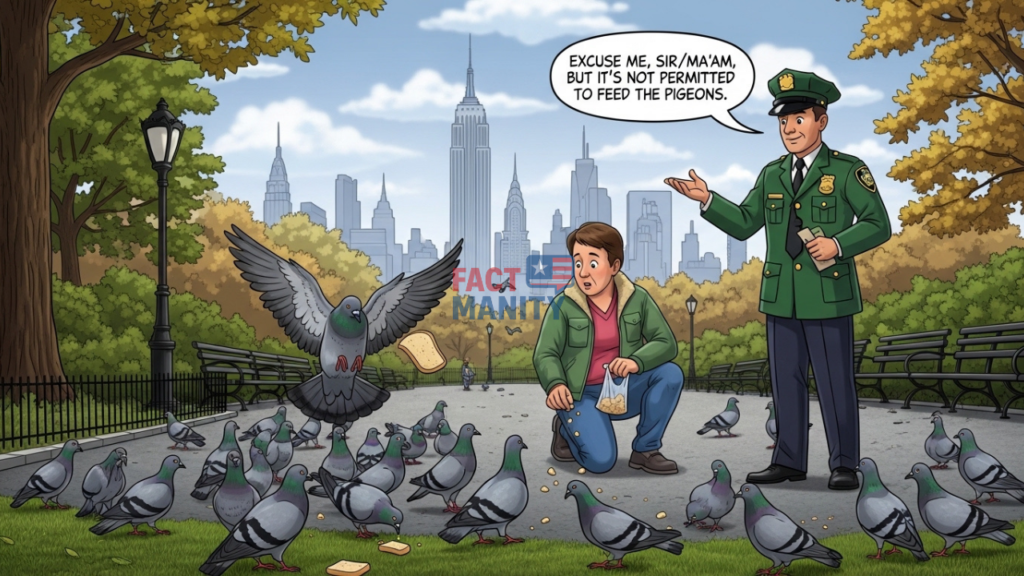
Believe it or not, some neighborhoods have cracked down on feeding pigeons and other urban wildlife. In parts of New York City, feeding pigeons can get you a summons under public health or sanitation rules. This is not about being a Grinch… it’s about droppings, disease concerns, and communal annoyance.
Example: Parks departments have fined persistent feeders to curb pigeon populations near plazas and public housing. So the next time you toss breadcrumbs like a romantic in a rom-com, you might be funding a fine instead of a viral video.
👉 Specific restrictions can vary by park, which is why the official New York City Parks rules and regulations outline where feeding wildlife is prohibited.
🚕 Vehicle Idling: The Ticket That Smells Like Gasoline
New York City enforces vehicle idling laws… you can be fined for leaving your engine on when parked or waiting. The rules are typically measured in minutes (more than 3 minutes in many cases), and enforcement happens via cameras, complaints, and uniformed inspectors.
Surprising fact: idling fines aim to reduce pollution and protect public health, but they also function as “micro-penalties” that add up quickly if a taxi-driver or delivery person forgets to shut off the engine between fares.
👉 These rules are part of the city’s environmental protection policies, which are detailed in the official
NYC vehicle idling regulations used to reduce pollution and unnecessary emissions
📜 Old Oddities Still on the Books Showcasing Weird Laws in New York
🏛 Antique Statutes That Read Like Satire
Some laws surviving from the 19th or early 20th century sound like they were written by a playwright with a vendetta against fun. Often they targeted specific social problems of the time… gambling dens, unregulated street sales, theatrical indecency and never got repealed cleanly.
Example: Historical laws once restricted “disorderly” theatrical performances and public displays. Today those phrases look vague, but they explain why some municipalities keep oddly worded public conduct codes.
These unusual legal leftovers aren’t unique to New York… many states still have strange laws that still exist in Americathat date back decades or even centuries.
🧾 When Municipal Code Meets Urban Legend
Many people believe that it’s illegal to carry ice cream in your pocket on Sundays or to walk around with a slice of pizza. These claims are classic urban legends… charming for bar banter, bad for legal research.
Reality check: Before you treat every weird law you hear as gospel, check the municipal code or an official city website. Municipal codes often contain oddly specific rules, but viral lists frequently mix myth and fact.
🎭 Modern Bizarre Statutes
🤡 Costume Rules and Masked Mayhem
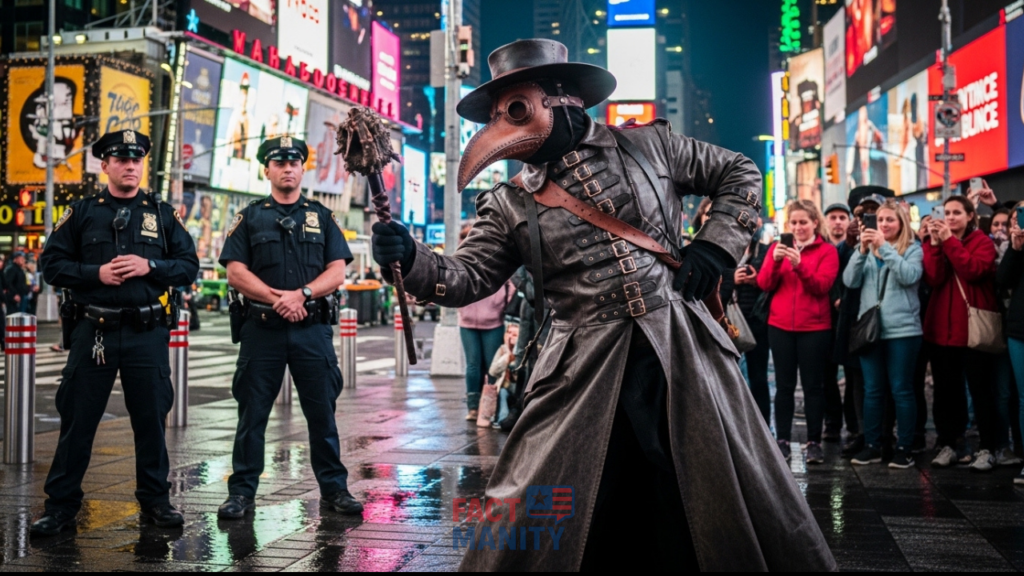
Ever wonder if wearing a clown suit in public in New York is a felony? The short answer: context matters. New York historically had anti-mask provisions… rooted in concerns over anonymity and public safety. Modern versions are about preventing intimidation or criminal concealment rather than banning Halloween.
Practical tip: Costumes are fine at festivals, parades, and conventions. If you’re masked while a crime is occurring or your attire obstructs public safety, cops will care more than the costume police.
🔊 Noise, Loitering, & the “Disturbing the Peace” Umbrella
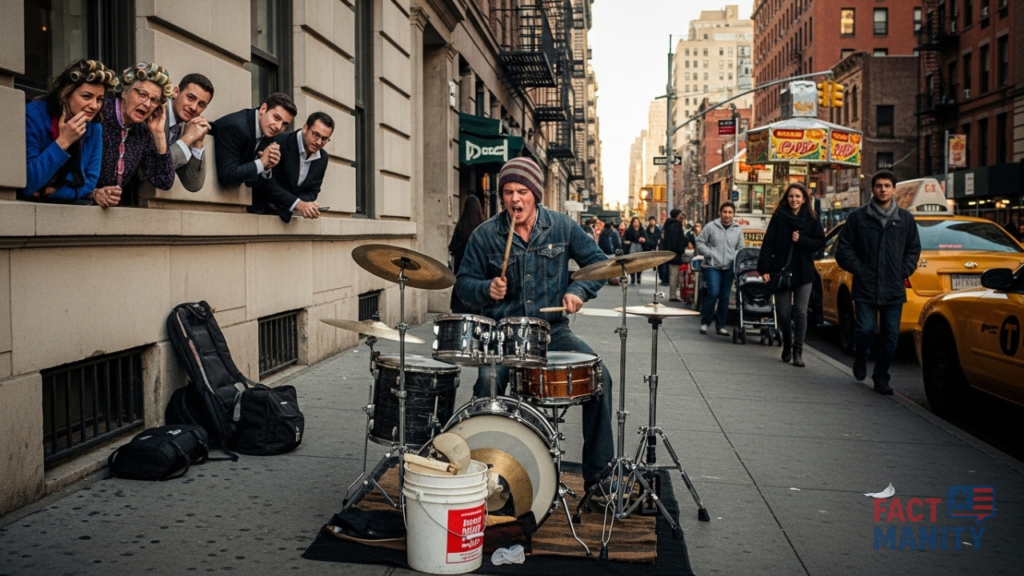
New York’s public order laws are famously flexible. “Disturbing the peace” can mean anything from loud late-night musical chairs to conspiratorial yelling outside an apartment building.
Real-world weirdness: Street performers occasionally get warnings or summonses for noise complaints, especially if businesses or residents call the police… an artful blend of free expression and neighborly sanity preservation.
😲 WTF Moment: Laws That Make You Do a Double Take
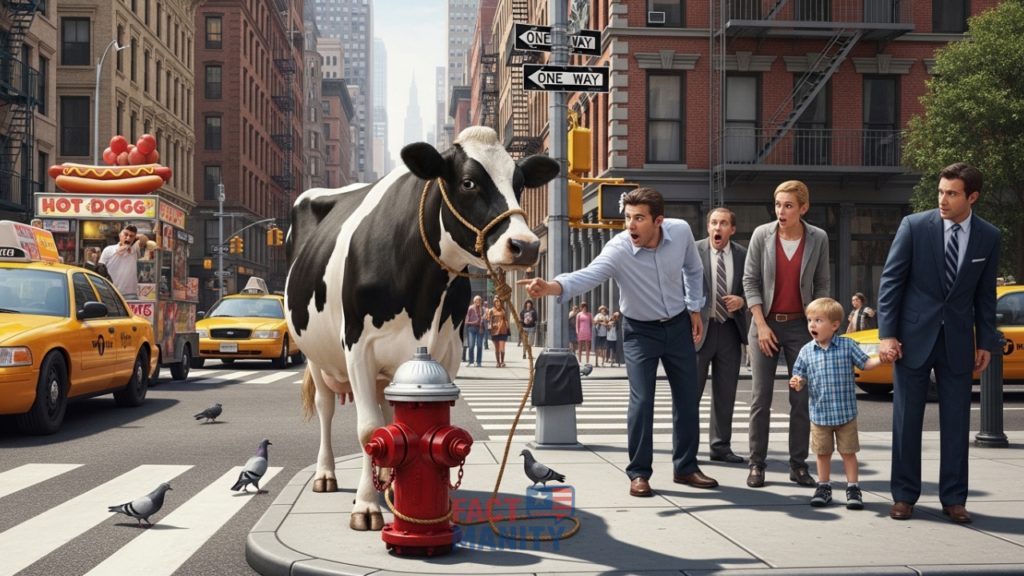
There’s always that one statute that prompts a hard blink. For example, an ordinance might describe a prohibited act in such specific terms that you wonder what scandal spawned it. “No person shall tie a cow to a fire hydrant” reads like a punchline but it’s the sort of very specific rule born from very specific incidents.
WTF fact: Many municipal codes are complaint-driven. If someone complained about a cow once, somebody wrote a rule to prevent cows ever again.
📖 Micro-Stories of Weird Laws in New York

👵 Micro-Story 1: The Pigeon-Feeding Grandma
Mrs. Rossi fed pigeons in the same park for 30 years. One summer a new building manager started issuing warnings, then a fine. She wrote an op-ed and the city clarified the rule: feeding is allowed in certain areas, prohibited in others. Outcome: Mrs. Rossi now feeds birds at a sanctioned community garden and writes stern postcards to pigeons who arrive late.
🚖 Micro-Story 2: The Taxi and the Idling Ticket
A cab driver waited five minutes for a quick fare and got an idling ticket. He contested it, argued about traffic, and ultimately paid a reduced fine. Lesson: in a city of quickly levied micro-fines, small habits become big expenses.
🎭 Micro-Story 3: The Masked Comedian
A street performer in a faux plague doctor mask drew a crowd and a police visit. Officers were chill after confirming it was a performance but the performer now carries permits and a business card proving he isn’t staging a robbery.
🌭 Micro-Story 4: The Urban Legend Debunk
A tourist posted that he’d been arrested for “walking with a hotdog in his back pocket.” The internet gasped, then laughed, then fact-checked: no arrest, just a confused cop and a better anecdote for the tourist’s blog. Moral: viral myths love a good metropolitan setting.
⚡ Quick Facts Stating Weird Laws in New York
- Idling laws in NYC can fine drivers for engines left running beyond a few minutes.
- Feeding wildlife like pigeons is regulated in various parks and housing areas to curb health risks.
- Historic statutes often include vague language that allowed broad enforcement… many remain on the books.
- Apocryphal laws (ice cream pockets, etc.) are popular but usually untrue in official codes.
- Local enforcement varies: a rule in one borough may be enforced strictly while ignored in another.
🏁 Final Thoughts
We have tried to explore and discuss some of the weird laws in New York in this article. New York’s legal quirkiness is part law, part history, part neighborly protection, and part myth-making. The important takeaway is to treat weird laws with respect: check local codes, don’t assume viral lists are accurate, and remember that the city’s real strange power lies in its ability to surprise you with a fine when you least expect it.
New York proves that laws can be just as fascinating as the city itself. Some rules protect public health, some were created for oddly specific situations, and others survive simply because nobody bothered to remove them.
If you enjoy discovering bizarre rules like these, you’re not alone. Every U.S. state has its own collection of strange, funny, and confusing laws that most people never hear about.
👉 Explore more Weird Laws from other U.S. states on FactManity and see which ones sound too crazy to be real.
You might be surprised how many unusual rules are still hiding in the legal books across America.
New York may have some of the most surprising rules in the country, but it’s far from alone. Across the country there are dozens of crazy laws you probably didn’t know were real that still exist in state and local codes today.
FAQs ❓
Are the “ice cream in your pocket” laws real in New York?
No. The famous claim that it’s illegal to carry ice cream in your pocket is a widely repeated urban legend, not a real New York statute. Lists of “weird laws” often mix real ordinances with myths that spread online. To verify a strange rule, it’s best to check official sources like the New York State Consolidated Laws or the New York City Administrative Code.
Can you really get fined for feeding pigeons in New York City?
Yes, in certain situations. Feeding pigeons and other wildlife is restricted in some parks and housing areas under sanitation and public health regulations. These rules are meant to control large bird populations and prevent health issues caused by droppings and overcrowding. Enforcement is often complaint-driven, meaning repeated feeding in restricted areas may result in a fine.
What is the vehicle idling law in New York?
New York City enforces strict vehicle idling regulations to reduce air pollution and protect public health. In most cases, leaving a vehicle engine running for more than three minutes while parked or waiting can result in a fine. Commercial vehicles, taxis, and delivery drivers are the most common targets of these enforcement efforts.
Why do old strange laws still exist in New York?
Many unusual laws remain on the books because repealing outdated statutes is not always a legislative priority. Some rules were created decades ago to address specific problems at the time. Even though they may sound odd today, they technically remain part of municipal codes unless they are officially removed or replaced.
Are costume or mask laws still enforced in New York?
Costumes themselves are generally legal, especially during festivals, parades, and Halloween celebrations. However, certain laws historically restricted wearing masks in public when used to conceal identity during criminal activity or intimidation. Today, enforcement focuses on public safety rather than harmless costumes.
How can someone check if a weird law in New York is actually real?
The most reliable way is to search official legal databases such as the New York Consolidated Laws, which contain the official statutes passed by the state legislature, while New York City rules appear in the Administrative Code and municipal regulations. Government websites and legal libraries are far more trustworthy than viral “weird law” lists online.
Should tourists worry about accidentally breaking a strange New York law?
Not really. Most unusual laws are rarely enforced unless someone’s behavior creates a nuisance or violates a clearly posted rule. Visitors who follow basic guidelines like respecting park rules, avoiding excessive noise, and following traffic laws… are unlikely to run into any legal trouble.
Disclaimer: This article is for informational and entertainment purposes only and does not constitute legal advice. Laws and ordinances can change over time and may vary by city or county. Always consult official state statutes, local municipal codes, or a qualified attorney for the most accurate and up-to-date legal guidance.
[…] Oklahoma is just one example of the many weird laws across the United States that continue to surprise travelers, historians, and curious readers. Check this article based on weird laws in New York. […]