

🎪 Welcome to Ohio’s Most Bizarre Legal Curiosities
Ohio is famous for many things… aviation pioneers, passionate sports fans, and some of the most charming small towns in America. But tucked inside the state’s legal codes is something far less expected: a collection of laws so oddly specific that they sound like they were written after someone had a very strange day.
When people search for weird laws in Ohio, they usually expect a few funny myths. What they don’t expect is how many of these odd rules actually came from real problems… livestock wandering through town, noisy late-night disturbances, or community disputes that got so heated they ended up in city council meetings.
The result is a legal time capsule filled with strange wording, quirky local ordinances, and a handful of rules that somehow survived more than a century of legislative updates. Some are rarely enforced, some still exist quietly in municipal codes, and others have turned into legendary stories that locals love sharing.
Either way, Ohio proves that even the most serious legal systems occasionally produce laws that make people stop and say, “Wait… that’s actually in the rulebook?”
Ohio is just one example of the many weird laws across the United States that continue to surprise travelers, historians, and curious readers. Read some weird laws in New Mexico.
🔥 Key Takeaways
- Ohio has a surprising number of unusual laws rooted in historical community issues.
- Many bizarre statutes originated during the horse-and-buggy era and remain in legal codes.
- Local ordinances are often the source of the strangest rules rather than statewide law.
- Most weird laws in Ohio are rarely enforced but still technically exist.
- Urban legends about bizarre laws spread easily online, making fact-checking important.
- Some oddly specific laws were created after real incidents in local communities.
Table of Contents
📊 Quick Look: Strange Laws Found Around Ohio
| Type | Example | Reality Check |
|---|---|---|
| State statute | Oddly worded historical laws | Often symbolic or outdated |
| City ordinance | Strange local rules | May still be enforced |
| Urban legend | Memes & listicles | Frequently exaggerated |
Quick Answer: Yes, Ohio has its share of weird laws… some are bona fide statutes, others are quirky local ordinances or misunderstandings that went viral. Most won’t get you arrested, but they make fantastic cocktail conversation and excellent viral blog content.

🤯 Weird Laws in Ohio That Make People Say “Wait… What?”
📚 Myth vs Reality: When Viral “Dumb Laws” Meet Real Statutes
There’s a cottage industry of “dumb laws” lists. Some entries are based on actual language in the Ohio Revised Code or city ordinances… others are resurrected jokes. The trick is that old municipal rules often linger because no one bothered to repeal them. So you get laws that mention horses, mud, or conduct that the lawmakers in 1892 assumed would be eternally relevant.
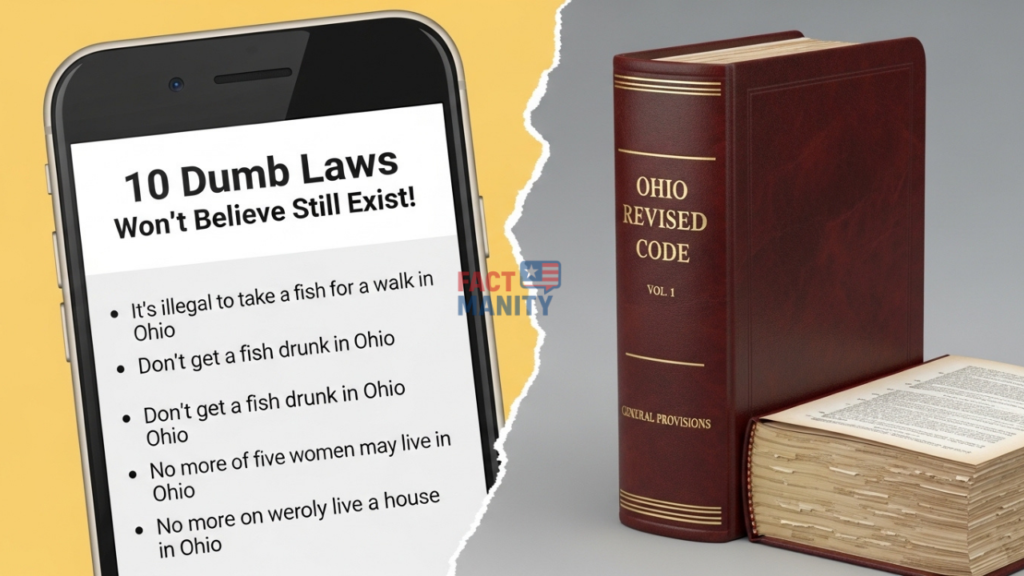
Example: many lists cite absurd-sounding restrictions but when you trace them, they’re either:
(a) shorthand summaries of broader statutes,
(b) repealed rules,
(c) misread translations of enforcement codes. Translation: fact-check if you want to avoid an awkward “actually, that’s a myth” moment.
🕰 When Old Legal Language Refuses to Retire
Legal language is conservative. A clause about not “annoying” livestock may have been sensible in an agrarian society and the wording stuck. That’s how you end up with statutes that look like the set list for a period drama… archaic, colorful, and occasionally baffling to 21st-century citizens.
Bottom line: sometimes the oddity is just grammar meeting the slow grind of legislative housekeeping.
🏙 Local Rulebooks: Where Ohio Gets Really Weird
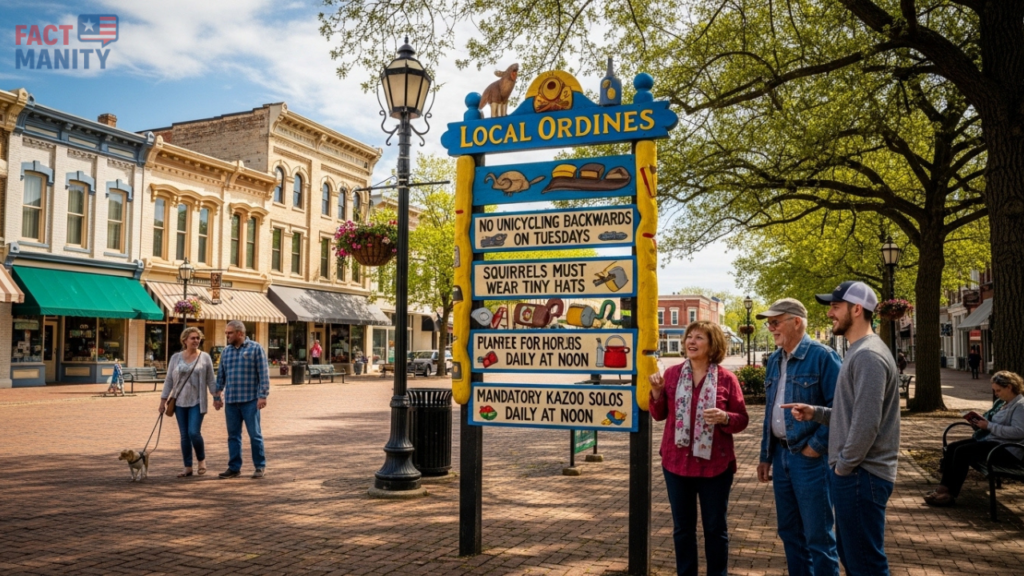
🌆 Big Cities, Strange Ordinances
Every Ohio municipality has a few oddities. Large cities like Cleveland, Cincinnati, and Columbus have well-documented ordinance books… small towns have the best anecdotal weirdness. City codes sometimes outlaw specific behavior like outrageous public nuisances or oddly specific littering definitions… that read like the punchline of a standup bit.
Real example (paraphrased): a number of small towns have explicit rules covering noise, animals, and public decency that are stricter or stranger than statewide laws. It’s not uncommon for a local ordinance to make national news after a particularly memorable enforcement incident.
👉 Many unusual local regulations can still be found in official Ohio municipal codes, where cities publish their ordinances online.
🏡 Small Town Codes with Big Personalities
In small-town Ohio, an ordinance can feel like a personality. There are tales of curfews, odd animal restrictions, and very specific building-code prohibitions that once made sense to a town council worried about horses or outhouses. Some towns treat these codes like cherished heirlooms… others quietly rewrite them when they get embarrassed on the internet.
Stories like these are surprisingly common across the country, which is why lists of strange laws that still exist in America continue to fascinate people who explore municipal codes.
⚖️ When a Weird Law Actually Has a Serious Backstory

🚨 Public Safety or Old-School Moral Panic?
Some laws that look silly began as responses to serious worries: disease control, public safety, moral panics, or protecting infrastructure. For instance, restrictions on unsanitary practices, open fires, or certain displays of indecency may read funny now, but they had a purpose at the time of adoption.
Understanding context is key. What looked like prudish overreach in 1923 might have been cutting-edge public health law back then.
👉 Many historical laws were originally created to protect communities under broader Ohio public safety and legal regulations.
🧱 The Real Reason Old Laws Stick Around
Once a law exists, repealing it takes legislative focus. Legislators prioritize budgets, safety, and major reforms… so a weird, non-harmful ordinance can linger for decades. The inertia of statutes is a major reason you can find glimmers of the past still shining in current codes.
😲 The “Did That Really Happen?” Moment
One of the best parts about cataloging weird laws in Ohio is the reaction: people gasp, laugh, then ask, “Wait, is that actually enforceable?” The fun answer: sometimes. Sometimes not. But the stories these laws create are endlessly entertaining and occasionally reveal real problems (like selective enforcement or outdated prejudice) that deserve scrutiny.
📖 Micro-Stories from Ohio’s Legal Twilight Zone
1) The Murky Parade Rule: A small town once fined a resident for parading a garden gnome in a Halloween procession because the ordinance required a permit for any “procession” longer than 20 feet. The resident fought it purely on principle and won in the court of public opinion and then the town revised the code.
2) The Great Goose Noise Debate: A neighborhood dispute about “loud animal noises” escalated to a citation for a backyard goose that allegedly broke a city noise ordinance. It read like an Onion sketch… until mediation fixed it with common sense and a fence.
3) The Haunted House Permit: A local haunted attraction was told it needed a public assembly permit because the city code defined “assembly” in a way that unintentionally covered pop-up haunts. After a weekend of memos, the city issued a temporary permit and added a clarifying amendment.
4) The Church Sign That Broke the Code: A church marquee posted a colorful message and received a notice for violating sign ordinances. The congregation lobbied the council, which then created a religious-sign exemption… because you can’t really argue with “Thou shalt not give parking tickets to the holy.”
⚡ Quick Facts About Weird Laws in Ohio
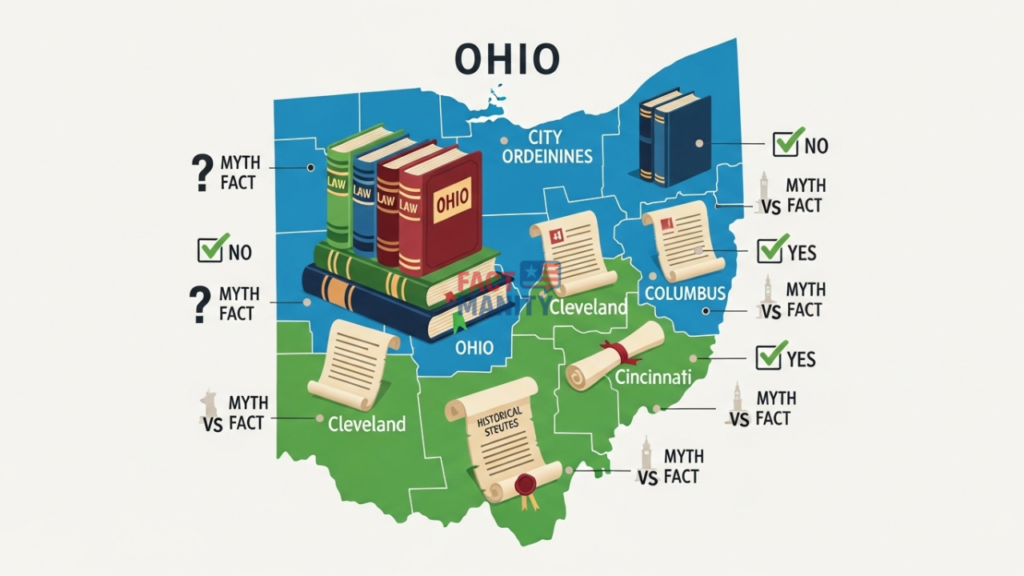
- Fact: Many widely shared “dumb laws” lists are compilations of outdated city ordinances, not current state law.
- Fact: Local codes, not state law, are usually the source of the zaniest rules.
- Fact: Enforcement of bizarre laws is rare because police and prosecutors prioritize safety and resource allocation.
- Fact: Repeal requires action… communities must ask for modernization to remove archaic statutes.
- Fact: If a law seems unbelievably specific, it could be a targeted reaction to a unique incident in that city’s past.
Ohio’s legal oddities might sound unbelievable, but they’re just one example of the many crazy laws you probably didn’t know were really hiding in state and local codes across the U.S.
🏁 Final Thoughts: Why These Odd Laws Still Fascinate People
Ohio is full of character and that includes its statutes. Whether you’re sharing a GIF of a bizarre law or digging into municipal code for fun, remember: there’s often a kernel of history behind the absurdity. Many rules that look like relics are simply legislative leftovers, waiting for somebody to notice and gently retire them.
So next time you see a viral list of weird laws in Ohio, laugh, fact-check, and maybe send a polite email to the local council. You might spark a law-repeal party. That, or at least a memorable town meeting.
Ohio’s strange legal history shows that laws are more than just rules… they’re snapshots of the problems communities once tried to solve. What seems ridiculous today might have been a serious concern decades ago.
That’s why exploring unusual statutes can be surprisingly entertaining. Behind every bizarre ordinance is usually a strange story, a historical moment, or a community argument that once demanded a solution.
If you enjoy discovering quirky legal oddities like these, keep exploring the FactManity Weird Laws series… every U.S. state has its own collection of surprising rules that will make you laugh, question history, and occasionally say, “How is that still a law?”
FAQs ❓
Are the weird laws in Ohio actually real?
Some of them are. Ohio does have a number of unusual statutes and local ordinances that sound strange today. However, many viral “dumb law” lists mix real regulations with exaggerated stories or outdated rules. The best way to know if a law is real is to verify it through official legal codes such as the Ohio Revised Code or local municipal ordinances.
Do police actually enforce these strange Ohio laws?
In most cases, no. Law enforcement agencies focus on modern criminal and safety laws rather than obscure historical statutes. However, if a strange ordinance still technically exists in a city code, it can occasionally be used in unusual situations or when resolving disputes between residents.
Why do bizarre laws stay in Ohio’s legal system for so long?
The main reason is legislative inertia. Repealing old laws requires time, legislative effort, and political attention. If a statute isn’t causing harm or confusion, lawmakers may simply leave it on the books while focusing on more urgent issues.
Are weird laws in Ohio usually state laws or city ordinances?
Most of the strangest rules people hear about come from local city ordinances, not statewide statutes. Small towns often created highly specific regulations in the past to control local issues such as animals, noise, or public conduct.
Can citizens request the removal of outdated laws?
Yes. Residents can petition their city council or contact state representatives to request that outdated laws be reviewed or repealed. In many cases, local governments update or remove archaic ordinances after public attention or media coverage.
How can I check if a weird Ohio law is still active?
The best approach is to search official government legal databases. State laws are published in the Ohio Revised Code, while local rules are available through city or county municipal code websites.
👉 Official state statutes can be reviewed through the Ohio Revised Code, which contains the current laws maintained by the Ohio Legislature.
Why are people so fascinated by strange laws?
Weird laws are entertaining because they reveal unusual moments in history. Many were written to solve very specific problems that communities faced decades ago. Today, they serve as humorous reminders of how society and legal systems evolve over time.
Disclaimer: This article is for informational and entertainment purposes only and does not constitute legal advice. Laws and ordinances can change over time and may vary by city or county. Always consult official state statutes, local municipal codes, or a qualified attorney for the most accurate and up-to-date legal guidance.
[…] Oregon’s legal oddities surprise you, you’ll probably enjoy exploring even more weird laws across Ohio that reveal just how creative local rulebooks can […]