

✨ Introduction
Massachusetts is famous for the American Revolution, elite universities, and some of the most passionate town meetings in the country. But buried beneath all that history is something far stranger… a legal rulebook that occasionally reads like it was written after a long night at a colonial tavern.
Nobody moves to Massachusetts expecting to discover that their state once made tattooing a crime or that you can technically get fined for scaring a pigeon in Boston. But here we are. These are real laws, real sources, and in some cases, real enforcement risk.
If you enjoy uncovering legal oddities, you may also find similar surprises in our guide to weird laws in Maryland, where local ordinances can be just as specific.
If you’ve ever wondered whether a “crazy law” is actually enforceable or if Massachusetts lawmakers really meant that… this guide breaks it all down. We separate myth from statute, explain why these laws exist, and show how (and when) they might still affect you today.
🔥✅ Key Takeaways
- Many weird laws in Massachusetts are historical relics that remain on the books but are rarely enforced.
- Most “crazy” or “dumb” laws originated from practical needs tied to Puritan values, commerce, or public order.
- Local municipal ordinances create the majority of strange rules, not statewide legislation.
- Enforcement usually depends on safety risks or formal complaints, not outdated wording alone.
- Checking town or city codes can help residents and travelers avoid unexpected legal issues.
Table of Contents
🙌 Quick Reference Table: Weird Laws in Massachusetts
| # | The Law | Where | Still Active? | Enforce Risk |
|---|---|---|---|---|
| 1 | Candy with over 1% alcohol is illegal | Statewide | ✅ MGL Ch. 138 | 🔴 Real |
| 2 | Tattooing was illegal until 2000 | Statewide | ❌ Repealed 2000 | 🟢 Historical |
| 3 | Dueling is illegal — even with consent | Statewide | ✅ MGL Ch. 265 Sec. 3 | 🔴 Real |
| 4 | Defacing a milk container is a crime | Statewide | ✅ MGL Ch. 94 Sec. 182 | 🟡 Rare |
| 5 | Hunting on Sundays is banned statewide | Statewide | ✅ MGL Ch. 131 Sec. 57 | 🔴 Real |
| 6 | No dancing at bars without entertainment license | Boston | ✅ Boston Licensing Board | 🔴 Real |
| 7 | Scaring pigeons is a fineable offense | Boston | ✅ City Ordinance | 🟡 Rare |
| 8 | Fortune telling is regulated by license | Multiple cities | ✅ Local Ordinances | 🟡 Rare |
| 9 | Affray (mutual street fighting) is illegal | Statewide | ✅ MGL Ch. 265 Sec. 14 | 🔴 Real |
| 10 | Snoring with open windows can violate noise codes | Framingham | ✅ Local Noise Ordinance | 🟢 Low |
Quick Answer: Massachusetts has a stack of rules that read like a comedy sketch. Most are outdated or municipal oddities rather than active policy… still, they make for excellent party trivia and cautionary tales for anyone who likes to wander into town halls at closing time.
🧾 10 Weird Laws in Massachusetts: Explained Like They Actually Matter!
Massachusetts did not become America’s most educated state by accident. It also did not become one of the most legislated ones by accident. Behind the ivy-covered walls and revolutionary history is a legal code that sometimes reads like the Puritan elders are still holding town meetings — and winning votes.
Like Massachusetts, states such as Louisiana also have a long history of strange and outdated laws shaped by local culture and tradition.
Every law below is real. Sources are verifiable. And every single one of them makes you stop and ask the same question: who exactly did this, and what happened that made it necessary?
🍬 Law #1: Alcoholic Candy is a Crime
Walk into a Massachusetts candy shop and try to sell a chocolate that contains more than 1% alcohol by weight and you have just committed a violation of state law.
This is not a joke and it is not a technicality buried somewhere nobody reads. The Massachusetts General Laws explicitly regulate the sale of candy containing alcoholic beverages, placing it under the same licensing framework as alcohol sales. If you want to sell a boozy truffle at your boutique chocolate counter, you need the same kind of authorization as a bar owner.
The law traces back to a period when temperance movements shaped Massachusetts policy at a granular level. The concern was straightforward: alcohol in candy form could bypass social norms around drinking. Children might consume it without parents realizing. The product could be sold in settings where alcohol itself was not permitted.
That logic made complete sense in the early twentieth century. Today it creates a very awkward situation for artisan chocolatiers who want to offer brandy-infused truffles at a farmers market.
The law is still active. Whether it gets enforced at your local holiday pop-up shop is a different question. But it is there, sitting in the Massachusetts General Laws, waiting.
✏️ Law #2: Tattooing Was Illegal in Massachusetts Until 2000
Source: Massachusetts General Laws Chapter 265, Section 34 – Repealed 2000
For most of the twentieth century, getting a tattoo in Massachusetts meant doing something technically illegal.
The state banned tattooing outright under a statute aimed at preventing the spread of disease and regulating practices seen as potentially harmful or associated with criminal subcultures. Tattoo parlors operated underground. Some artists worked across state lines, driving clients to Rhode Island or Connecticut to get work done that Massachusetts would not permit within its borders.

The ban lasted until 2000, when the legislature finally repealed it and brought Massachusetts into alignment with the rest of the country. The repeal came after years of advocacy from artists and civil liberties groups who argued the ban was both ineffective and unconstitutional.
What makes this law remarkable is not just that it existed… it is how long it survived. By the time Massachusetts repealed it, tattooing had already become mainstream in American culture. Athletes, celebrities, and ordinary professionals had tattoos across the country. Massachusetts was still treating the practice as a prohibited act.
The state was roughly three decades behind the national conversation and the law stayed on the books the whole time.
⚔️ Law #3: Dueling is Illegal. Even If Both People Agree.
Most states banned dueling. Massachusetts made sure to close the loophole.
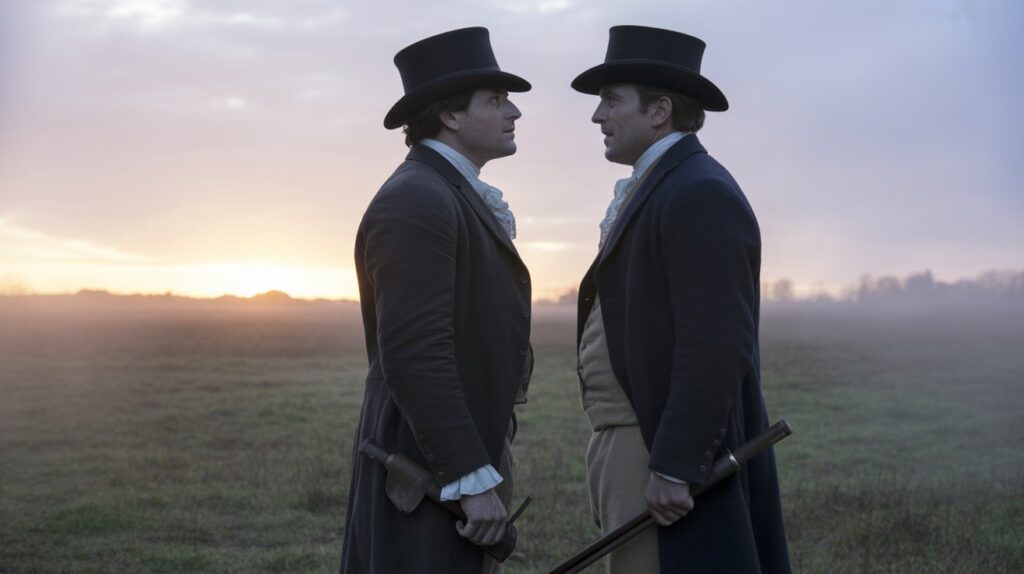
Under Massachusetts law, it is not just illegal to kill someone in a duel, it is illegal to participate in one at all, regardless of the outcome, and regardless of whether both parties consented. The statute also criminalizes being a second, a term for the person who arranges or witnesses the duel on behalf of one of the participants.
This specificity matters. In some historical debates about dueling laws, defendants argued that mutual consent made the activity a private arrangement between two adults. Massachusetts disagreed at the legislative level. If you agreed to duel and survived, you were still a criminal. If you served as a second and nobody died, you were still legally implicated.
The law was written during an era when dueling was a genuine social practice among certain classes, a formal way to resolve disputes over honor. Massachusetts decided that no level of formal ceremony made it acceptable.
It is still on the books. Whether anyone in Massachusetts is currently at risk of being charged under this statute is unlikely. But the precision of the law specifically outlawing consent as a defense… says something about how seriously the commonwealth took the issue.
🥛 Law #4: Defacing a Milk Container is a Criminal Act
Source: Massachusetts General Laws Chapter 94, Section 182
Scratch the name off a milk jug in Massachusetts and you have technically committed a crime.
The law makes it illegal to deface, obliterate, or destroy the identifying marks on a milk container. This includes the name of the dairy, the brand, or any identifying symbol registered to a specific producer.
The origin of this law is commercial, not moral. In the early twentieth century, dairy companies used reusable glass bottles that were returned, washed, and refilled. The problem was theft and confusion, dairies were losing bottles when competitors or individuals removed the identifying marks and repurposed them as their own.
The law was designed to protect property. Dairy containers were capital assets, not single-use packaging. When someone scratched off the identifying marks, they were effectively converting someone else’s property for their own use.
The modern version of this law technically extends to modern containers, even though the economics of reusable dairy containers no longer apply the same way. The statute has been updated but the core prohibition remains active.
If you have ever peeled a label off a milk carton for a school project without thinking twice, you were technically in violation of Massachusetts law. This is almost certainly not what anyone intended. But that is the nature of statutes that outlast the problems they were written to solve.
🦌 Law #5: No Hunting on Sundays. At All.
Massachusetts prohibits hunting on Sundays across the entire state. No exceptions for licensed hunters. No exceptions for private land. The day is off limits.
This is one of the most actively enforced weird laws on this list because it is not just historical. It applies right now, to real hunters, every single week.

The law’s origins are in Sabbath observance. New England’s early settlers treated Sunday as a day of rest with legal force. Activities that were acceptable on weekdays, commerce, physical labor, recreational shooting… were restricted or outright banned on Sundays.
For hunting, the Sunday ban stuck. Massachusetts is one of only a small number of states in the country that maintains a full Sunday hunting ban. Hunters, particularly those with limited weekday availability, have pushed back for years. The Massachusetts legislature has debated loosening the restriction multiple times.
As of now, the full ban remains in place. If you go hunting in Massachusetts on a Sunday, even on land you own, with a valid license, for game that is in open season… you are breaking state law.
This is the rare Massachusetts weird law that is genuinely enforced, carries real penalties, and affects a significant number of residents every single week of the hunting season.
💃 Law #6: You Cannot Dance at a Bar Without a Special License
Source: Boston Licensing Board – Entertainment License
Walk into most Boston bars and try to dance to whatever is playing overhead. Technically, you could be in a venue that is violating city law.
Boston’s licensing structure requires establishments that allow dancing on the premises to obtain a specific entertainment license on top of their regular liquor license. Without it, patrons dancing in a bar can create a compliance issue for the business owner.
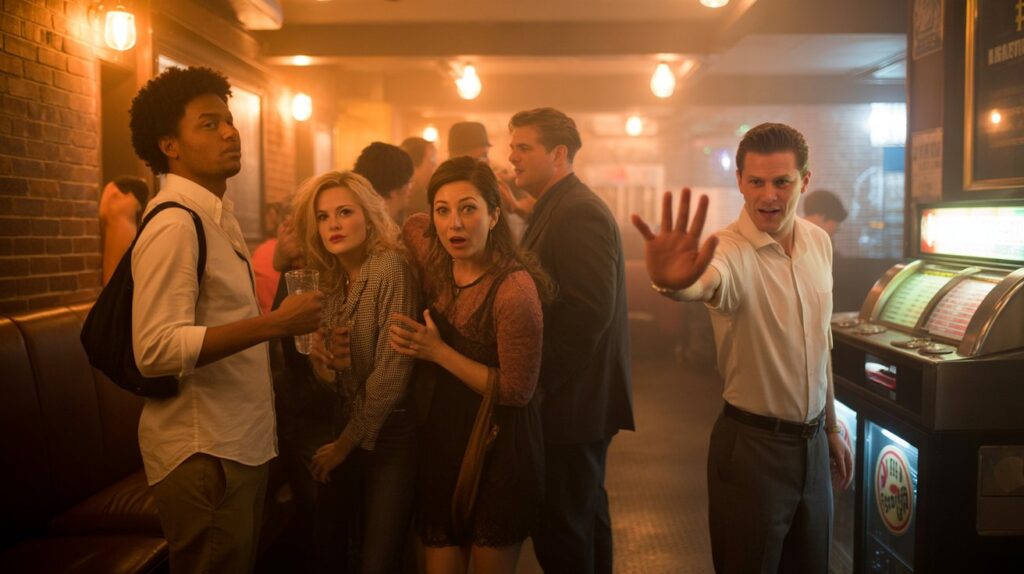
This law traces back to Boston’s Blue Laws and decades of strict regulation around public entertainment, nightlife, and the social settings associated with alcohol. The city wanted to control where dancing happened, who could profit from it, and what standards those venues had to meet.
The result is a licensing framework that still exists today, even though the social concern that created it has largely faded. Boston has active enforcement through the Licensing Board… venues do get cited for entertainment violations.
What makes this law land in the weird category is the practical reality. Music plays in most bars. People move. The line between swaying with your drink and “dancing” is genuinely unclear. Enforcement is selective and largely complaint-driven. But the rule is real, and the Licensing Board is a real regulatory body with real authority.
🐦 Law #7: Scaring Pigeons is a Fineable Offense in Boston
Source: Boston City Ordinance
Boston takes its pigeons seriously enough to have put protections in writing.
The city has municipal provisions that prohibit actions specifically designed to startle, scatter, or frighten pigeons in public spaces. The practical enforcement is rare and usually tied to documented harassment rather than accidental encounters with birds near a park bench.
The origin of this ordinance is connected to broader animal welfare and public nuisance rules that Boston developed over time. Pigeons in dense urban settings attracted attention from city planners who saw both their presence and their mistreatment as public order issues.
The law reflects a period in Boston’s municipal history when the city was actively regulating public behavior at a granular level including how residents and visitors interacted with animals in shared spaces.
Today it reads as a curiosity. The image of someone receiving a citation in Boston for making pigeons scatter is genuinely difficult to picture. But the ordinance exists, and it tells you something about the level of detail Boston put into its local legal code at a time when city governance meant regulating everything.
🔮 Law #8: Fortune Telling Requires a License
Source: Various Massachusetts Municipal Codes
In multiple Massachusetts cities, telling someone’s fortune is a regulated professional activity that requires a municipal license.
The origins of this kind of regulation go back to concerns about fraud and predatory practices targeting vulnerable people. Cities across the country passed ordinances regulating fortune tellers, psychics, and similar practitioners during periods when transient con artists were a documented social problem.
Massachusetts cities kept their versions of these ordinances even as enforcement became practically non-existent. The licensing requirements remain technically on the books, which means operating a fortune-telling business without authorization puts you in violation of local code.
What makes this law interesting is the philosophical tension underneath it. Massachusetts is also home to some of the most prestigious universities and research institutions in the world. It is a state that takes empirical reasoning seriously. Yet tucked into its municipal codes is the implicit acknowledgment that fortune telling is a real enough profession to require regulation.
The state did not ban the practice. It licensed it. That distinction says a great deal about the pragmatic approach Massachusetts has historically taken toward activities it found questionable but could not quite bring itself to prohibit outright.
🥊 Law #9: Mutual Street Fighting is a Specific Crime
Massachusetts has a specific statute called affray that makes it a crime for two or more people to fight in a public place, even when both parties are willing participants.
This matters because the most common defense in a mutual fight is consent. Both people agreed. Both people threw punches. Who is the victim? Massachusetts law answers that question clearly: the public is the victim. The crime is not assault between the individuals… it is the breach of public peace.
The law traces to English common law and reflects a view of public spaces as shared property that the community has a right to keep orderly. Two people choosing to resolve a disagreement with their fists in a public square were not just settling a private matter. They were imposing their conflict on everyone around them.
Affray is a misdemeanor in Massachusetts. It is still used in prosecutions today, usually in cases where both parties were involved in a brawl and the evidence does not clearly establish who initiated contact.
If you have ever watched two people square off in a parking lot and thought nobody did anything wrong because it was mutual, Massachusetts law would disagree with you and has the statute to back that up.
😴 Law #10: Snoring With Open Windows Violates Noise Codes
Source: Framingham, Massachusetts – Local Noise Ordinance
Framingham, Massachusetts has a local noise ordinance that broadly prohibits sounds that disturb the peace of neighbors. Under the right circumstances, loud and chronic snoring with a window open has been cited as a potential violation of this ordinance.
No one is actively patrolling Framingham neighborhoods listening for snoring. The ordinance is complaint-driven and enforcement is extremely rare. But the legal framework exists, and the city has not carved out a specific snoring exemption.

The practical origin of this rule is straightforward. Noise ordinances are designed to preserve residential quiet, and they are written broadly to cover any unreasonable sound that disturbs neighbors. Sleep sounds were not the primary target. But the wording is general enough to technically include them.
What puts this in the weird laws category is not that Framingham is hunting down snorers. It is that the legal argument is technically coherent. If your neighbor’s open window snoring is loud enough to keep your household awake, a complaint under a broad noise ordinance is not legally absurd.
The line between a quirky legal curiosity and an actual applicable rule is thinner than it looks… which is essentially the story of every law on this list.
🏛️ Why These Weird Laws Exist (Historical Context) ?
✌ Puritans, Practicality & Precedent
Many odd laws originate with early settlers who needed to control small, fragile communities. A rule that looks silly today might have prevented riots, disease, or market chaos two centuries ago.
In short: what looks like micromanagement was often crisis management.
📜 When Old Laws Outlast Old Problems
Statutes don’t fall off trees. Unless repealed, they sit in the books and accumulate dust. That means a rule aimed at horse travel or saltwater fish preservation can remain technically valid long after the horses retire.
It’s why you can sometimes read a legal code and find yourself transported to a different century.
Curious how far these legal quirks go? Explore more unusual statutes in our breakdown of weird laws in Idaho, where history and odd legislation collide.
📌 Quick Facts About Weird Laws in Massachusetts
📌 Quick Facts — Weird Laws in Massachusetts
- ✦ Massachusetts banned tattooing statewide until 2000 — one of the last states to do so
- ✦ Sunday hunting is still fully banned statewide — it is actively enforced every week
- ✦ Dueling is criminalized even when both parties consent — being a “second” is also illegal
- ✦ Alcoholic candy with more than 1% alcohol requires the same licensing as a bar in Massachusetts
- ✦ Full state legal code is publicly searchable at mass.gov — all laws above are verified
💭 Final Thoughts: History, Humor & the Law
Massachusetts is equal parts revolutionary zeal and charmingly pedantic municipal code. The strange rules that survive are less about targeting you personally and more about a legal ecosystem that remembers the past by accident.
Massachusetts proves that the law isn’t always cold or distant… sometimes it’s historical, oddly specific, and unintentionally hilarious. These weird laws in Massachusetts aren’t just trivia, they’re echoes of old fears, forgotten problems, and very passionate town meetings.
👉 Read about Legal & civic authority
Whether you’re a resident, a visitor, or someone who simply enjoys uncovering the strange side of American history, knowing these rules adds context and occasionally saves you from an awkward conversation with a town clerk.
Curious how many other U.S. states hide similar legal surprises? Explore more strange, shocking, and unbelievable American laws on FactManity… where history meets the unexpected.
Disclaimer: This article is for informational and entertainment purposes only and does not constitute legal advice. Laws and ordinances may change over time and can vary by city or county within Massachusetts. Always consult official state statutes, local municipal codes, or a qualified attorney for the most accurate and up-to-date legal guidance.
FAQs ❓
Are weird laws in Massachusetts actually enforced?
Most are not. Enforcement usually depends on safety concerns or formal complaints, especially at the municipal level.
👉 Used by many MA cities & towns
Where can I check official Massachusetts laws?
State laws appear in the Massachusetts General Laws, while local ordinances are published on city or town websites.
👉 Read the Source of state-level laws
What are the most famous weird laws in Massachusetts?
The most well-known include the statewide Sunday hunting ban (MGL Ch. 131 Sec. 57), the dueling prohibition that criminalizes even consenting participants (MGL Ch. 265 Sec. 3), and the tattooing ban that stayed on the books until 2000. All three are verified, real, and documented in official state records.
Where can I verify Massachusetts laws myself?
Massachusetts General Laws are fully searchable at mass.gov/general-laws. For city-specific ordinances — like Boston’s entertainment licensing rules or Framingham’s noise code — check municode.com and search your specific city or town.
Are statewide weird laws common?
Less common than local ones. Most statewide oddities are historical leftovers rarely enforced.
How can I avoid breaking a local ordinance?
Check municipal codes or ask the town clerk… especially before events, displays, or construction.
Why do online lists of weird laws differ?
Many lists rely on outdated sources or exaggeration. Always verify against official legal text.